Table of Contents
Brands spend a large part of their trade budget on promotions and displays, but many of them are never set up as planned. The only way to know is to check in store: define what “compliant” means, check a sample of stores in the first days of the promotion, collect photo evidence, and fix the problems before the promotion ends.
This guide explains how promotions fail in store, how to check them step by step, and which methods brands use to do it across hundreds of stores.
Promotions Rarely Look Like the Plan
Brands often overestimate how well their promotions are executed. A study by Shop! found that CPG companies estimated their in-store promotion compliance at around 70%, while the measured rate was only 40%.
Roamler's own data points the same way. After more than twelve years of promotion monitoring, execution scores above 80% are the exception rather than the rule.
The problem is also hard to see from the head office. Sell-out data shows that a promotion underperformed, but not why. Only a store check shows whether the display was there in the first place.
The Most Common Display Problems
- The display is not set up at all. The POS material arrives in store but stays in the stockroom.
- The promotion starts late or ends early. The display goes up a week after the start date, or is removed before the end.
- The display is in the wrong place. It is set up at the back of the store instead of the agreed end cap or entrance.
- Products are missing or out of stock. The display is there, but some SKUs are missing, or it is empty after the first days.
- The price or signage is wrong. The promotional price is not shown, or the shelf price does not match the promotion.
- Competitors take over the space. Other brands' products end up on the display.
How to Check Your Promotions and Displays, Step by Step
- Define what “compliant” means. Write down what a correct display looks like for this promotion: location in store, products, number of facings, price, signage and POS material. Use the agreed plan with the retailer as the reference.
- Choose the stores and the timing. Check in the first days of the promotion, when problems can still be fixed. For longer promotions, add a second check halfway through. Start with the stores that matter most for sales, and check the rest on a sample basis.
- Collect photo evidence. Someone visits each store, takes photos of the display and the shelf, and answers a short checklist (see below). Photos make the results hard to dispute.
- Score each store. Give each store a compliance score, and break the problems down by type: display missing, wrong location, products missing, wrong price. This shows what to fix first.
- Act fast on non-compliant stores. Send the list of stores with problems to the people who can fix them: your sales team, a merchandiser, Roamler or the retailer. Check again to confirm the fix.
- Review after the promotion. Compare sales in compliant and non-compliant stores. This shows the real cost of poor execution, and helps in the next negotiation with the retailer.
A Checklist for Every Store Check
- Is the display in place on the day of the check?
- Is it in the agreed location in store?
- Are all the promoted products on the display?
- Are the products in stock, with enough facings?
- Is the promotional price shown and correct?
- Is the POS material (header, shelf talker, wobbler) in place and in good condition?
- Are there competitor products on the display?
- Is the promotion still running on the agreed dates?
Methods Compared
| Method | How it works | Strengths | Limits | Best for |
|---|---|---|---|---|
| Own sales reps | Reps check displays during their regular store visits | Can fix problems on the spot; know the store staff | Limited number of stores per day; visits may not match the promotion dates | Key accounts and high-value stores |
| Merchandising agency or broker | An agency sets up and checks displays for the brand | Can build the display and check it | Fixed routes; reporting often comes after the promotion | Large, planned promotion programmes |
| Store staff or retailer reporting | The retailer or store staff confirm that the display is in place | Low cost | Hard to verify; quality varies a lot by store | Retailers with a strong data-sharing partnership |
| On-demand store checks like Roamler | Independent auditors visit stores when needed and send photos and answers via an app | Many stores in a few days; independent view; timed to the promotion | No ongoing relationship with store staff; needs clear instructions and quality checks | Checking a promotion across a wide network in its first days |
| Image recognition | Software analyses photos of displays and shelves | Fast, consistent analysis | Still needs someone in store to take the photos | Brands with a large volume of photos |
Which Displays Are Hardest to Execute?
Display types differ a lot in how often they are set up correctly. The more products a display carries, and the more store formats it has to work in, the harder it is to execute.
| Display type | Compliance rate |
|---|---|
| Bunker | 58% |
| End cap | 47% |
| PDQ | 47% |
| Pallet | 38% |
| Floor stand | 26% |
| Dump bin | 9% |
| Shipper | 4% |
Source: A.R.E. / POPAI Compliance Study, 2015.
The same study found that who builds the display also matters. Displays set up by brokers were executed as planned in 47% of cases, against 37% for store personnel and 6% for direct store delivery (DSD).
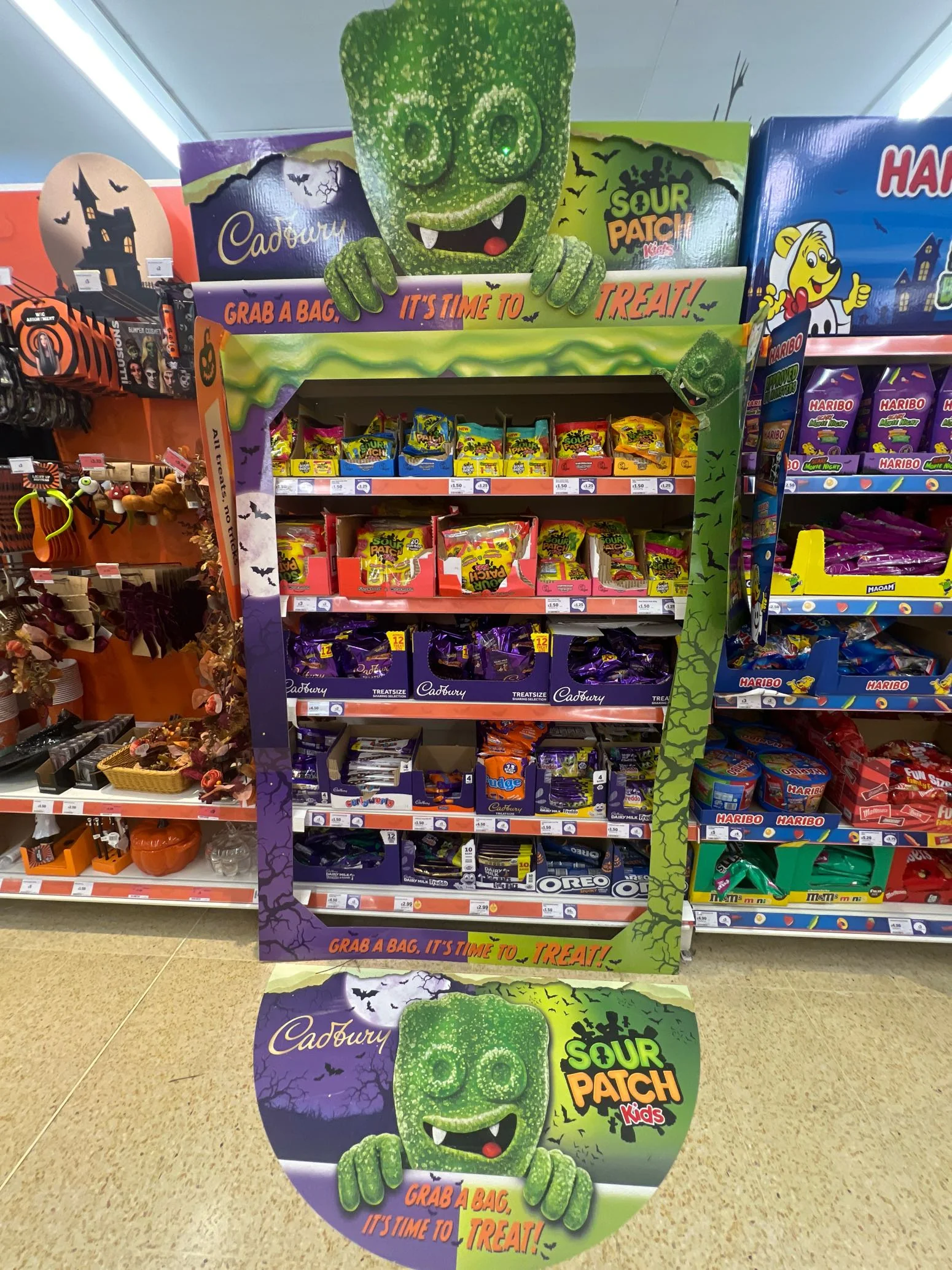
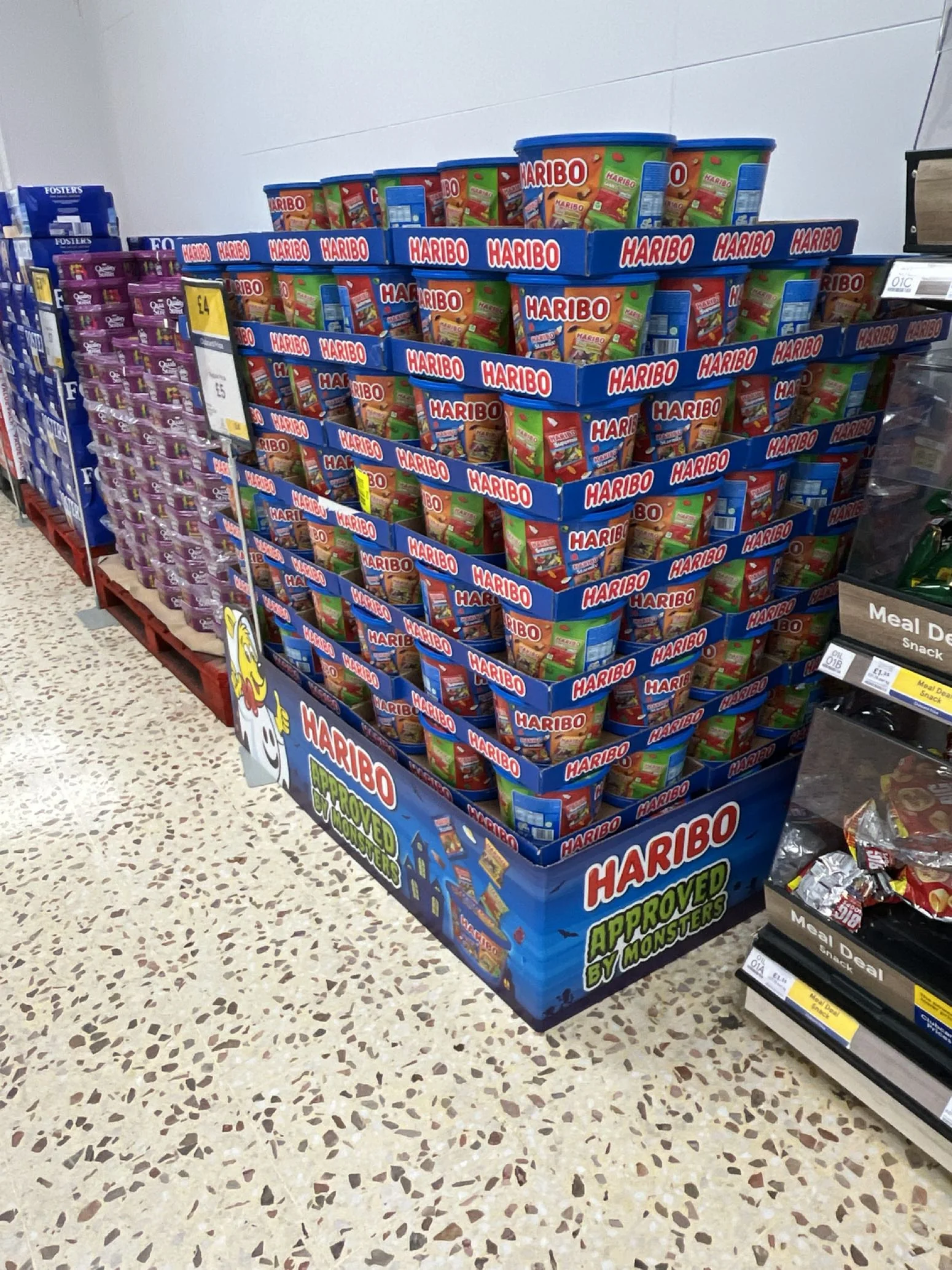
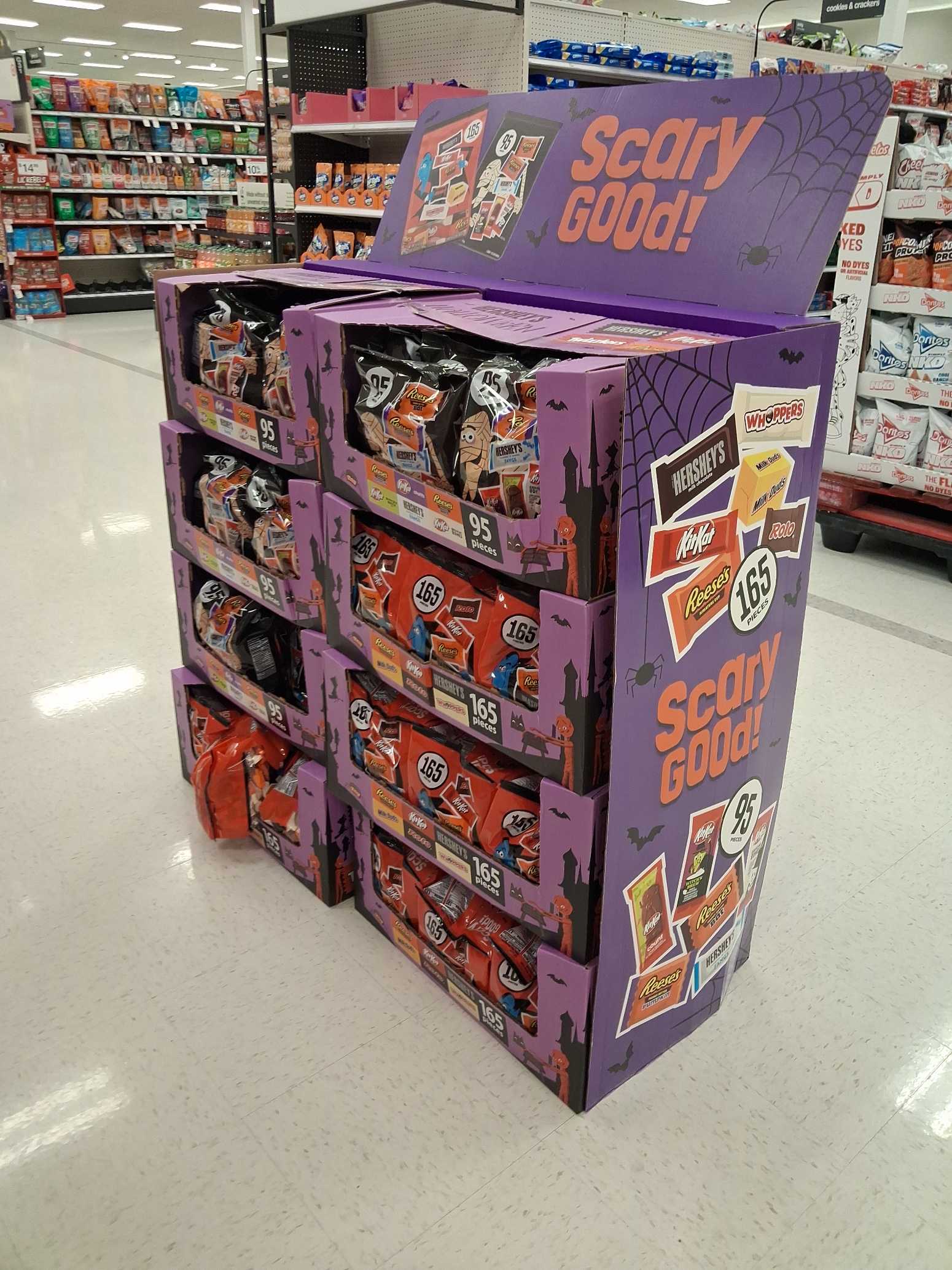
Seasonal displays are a good test. In a Roamler check of 92 UK supermarkets and discount stores before Halloween 2026, 91% had at least one Halloween display, but supermarkets and discounters set them up in very different ways. In the US, a check of 103 Target and Walmart stores found Halloween displays outside the seasonal aisle in 86% of stores.
How Roamler Checks and Fixes Promotions and Displays
Roamler runs on-demand store checks and merchandising for FMCG and CPG brands across Europe and the US. For promotions and displays, this means:
- Checks timed to the promotion: stores are visited in the first days, while there is still time to act
- Photo-verified results within 48 hours, by store, retailer and region
- Problems broken down by type: display missing, wrong location, products missing, wrong price
- Fixes in store: where needed, a merchandiser can set up or correct the display, often within 24 hours
- A follow-up check to confirm that the fix is in place
Across Roamler's promotion execution programmes, the average compliance rate is 91%.
Want to check your next promotion?
We check your promotions and displays across your store network, with photo-verified results within 48 hours.
Get in touchFrequently Asked Questions
When should I check that a promotion is in place?
In the first days of the promotion. This is when problems are most frequent, and when there is still time to fix them. For promotions that run several weeks, add a second check halfway through, because displays often empty out or disappear before the end date.
How many stores should I check?
It depends on the size of your network and the value of the promotion. Check all stores that matter most for sales, and a representative sample of the others. A sample is enough to see how well the promotion is executed overall and which retailers or regions have the most problems.
What is a good promotion compliance rate?
There is no single benchmark, because results vary by retailer, display type and country. Industry studies have measured average compliance around 40%, far below what brands expect. With systematic checks and fast corrections, Roamler's promotion execution programmes reach an average of 91%.
Who is responsible for setting up a display: the brand or the retailer?
It depends on the agreement. In many cases, the retailer's store staff set up the display with material supplied by the brand. In others, the brand uses its own merchandisers or an agency. Either way, the brand pays for the promotion, so it has the most to lose if the display is not in place.
Can I check my promotions without a field team?
Yes. On-demand store checks let you visit hundreds of stores in a few days, without your own field team. Independent auditors take photos and answer a checklist, and the results come back within days.
What should I do when a display is missing?
First check why: the material may not have arrived, the store may not take part in the promotion, or the display may have been removed early. Then send the issue to the person who can fix it, and check the store again. With photo evidence, the conversation with the retailer is much easier.