Aldi, Lidl, B&M, Home Bargains: the rise of UK discounters
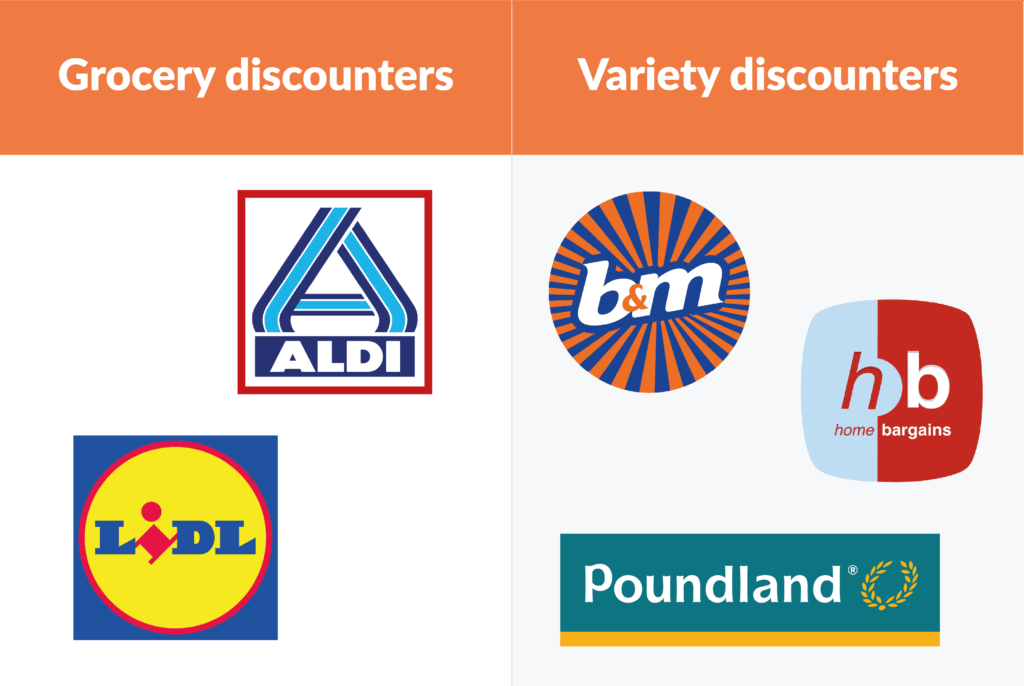
Looking at the UK discounter landscape, we can divide retailers into two main categories:
• Grocery discounters such as Aldi and Lidl, where shoppers complete their weekly food shop.
• Variety discounters such as B&M, Home Bargains, and Poundland, which are not primary grocery destinations but attract shoppers looking for bargains across a wide range of categories.
Discounters are continuing to grow in the UK. Aldi and Lidl represented just 6% of UK grocery spend in 2010; today, that figure has tripled to 19%. When we also include variety discounters, the channel becomes even more significant. By attracting a growing number of consumers, FMCG brands have every interest in paying attention to this channel.
However, discounters do not operate in the same way as traditional supermarkets, and the challenges differ depending on the type of discounter. Let’s take a closer look.
Grocery discounters: a distribution challenge
Together, Aldi and Lidl now attract one in five UK grocery shoppers. However, 80–90% of their sales come from private label products, leaving very limited space for external brands. As shoppers move more of their weekly spend into Aldi and Lidl, many FMCG brands disappear from consideration entirely.
This challenge cannot be solved through traditional field visits or compliance audits alone. What becomes more valuable is understanding:
• Which categories and SKUs still retain a branded presence
• How branded distribution differs between Aldi and Lidl
• How private label alternatives are merchandised alongside branded products
Variety discounters: an execution visibility challenge
B&M, Home Bargains, and Poundland present a very different challenge. Here, branded FMCG products are widely available. However, unlike major supermarket chains, these retailers provide very limited operational transparency. Brands often lack access to store-level sales data, planogram information, compliance reporting, or regular field access.
The result is a channel that combines significant sales volume with a major visibility gap. Is your product available on shelf? Is the price label correct? Is your promotion properly executed? These questions become increasingly important as the discount channel continues to expand.
One approach we often recommend to our clients operating in this channel is to run targeted store audits across a representative sample of 50–100 stores to capture main data like shelf placement, facing count, price label accuracy, and stock availability… Repeated quarterly and combined with sell-in data, we can have a precise vision of the overall channel and identify some corrective actions.
The discount channel has become too important to manage on assumptions alone
If you want a clearer view of execution across all types of discounters, Roamler helps FMCG brands track availability, pricing, promotions, and shelf presence at store level. Contact us to know more!