
- Insights
What is Retail Execution? Definition, KPIs & Best Practices for FMCG Brands
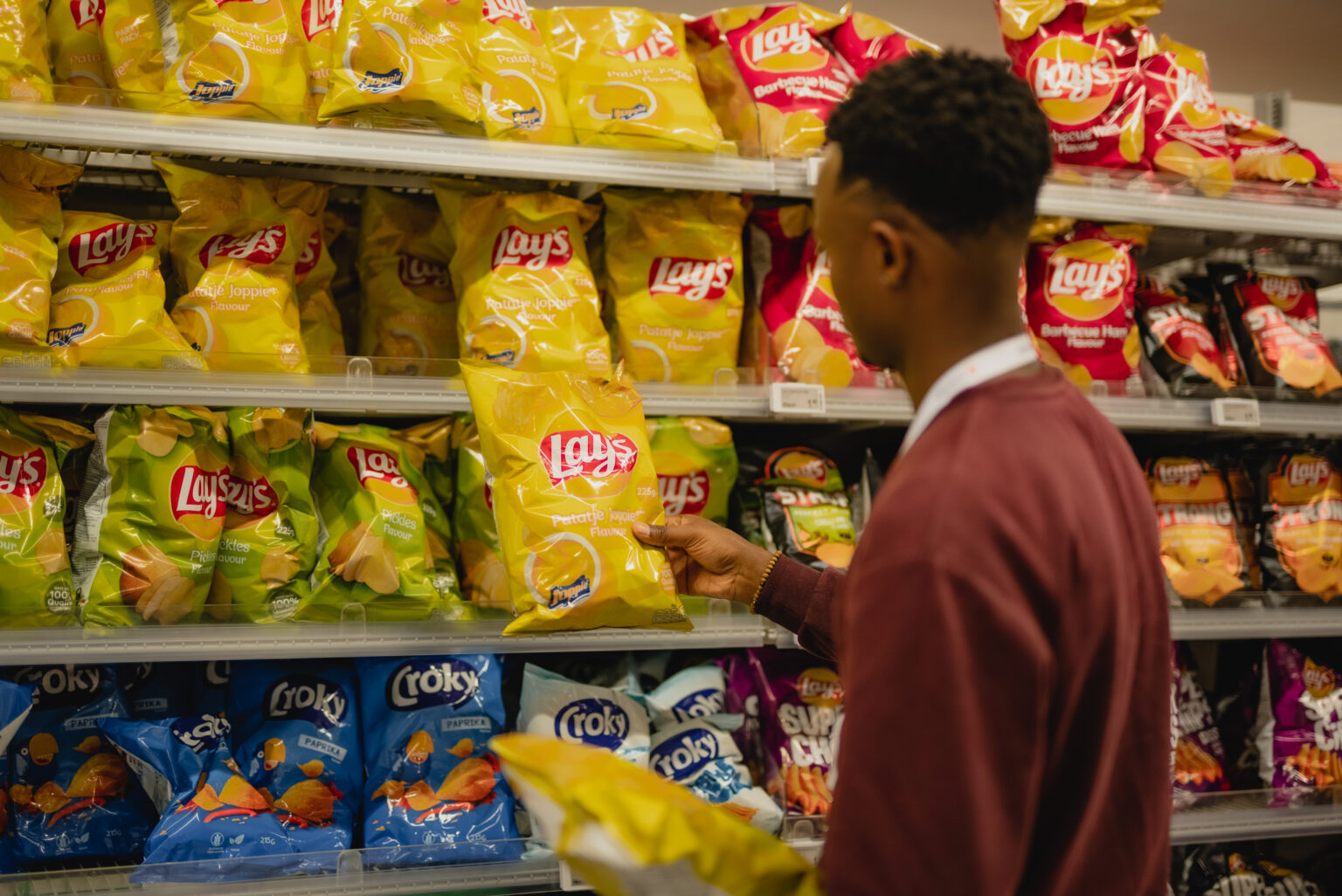
Definition: What is retail execution?
Retail execution is the set of activities that ensure a brand’s products are available, visible, and correctly presented at the point of sale — consistently, across every store and every channel.
It covers everything that happens after a commercial agreement is signed with a retailer: product listing, shelf placement, pricing compliance, promotional display installation, and stock availability.
It is also referred to as “in-store execution,” “field execution,” or “perfect store execution.” All describe the same fundamental challenge — the gap between what was agreed and what is actually happening on the shelf.
Why retail execution matters for FMCG brands
A large share of purchase decisions are made at the point of sale. Every out-of-stock, every missed promotional display, every misplaced product is an immediate and measurable revenue loss.
At scale, even a 1–2% improvement in execution compliance can generate millions of euros in incremental sales.
Beyond direct revenue, poor execution damages brand equity. A shopper who can’t find a product doesn’t know whether it’s the brand’s fault or the retailer’s. The negative perception sticks to the brand.
For National Sales Directors and Retail Execution Managers, execution quality is also directly tied to trade investment ROI — and to commercial credibility during annual negotiations.
The 5 pillars of retail execution (The Perfect Store)
The Perfect Store is the framework most widely used by FMCG brands to define and measure execution standards. It covers five core dimensions:
1. 🏷️ Distribution & Availability (Numeric Distribution): Is the product listed and physically present in every store where it should be sold? Numeric Distribution — the percentage of outlets stocking a given SKU — is the most fundamental retail execution metric.
2. 📐 Shelf Placement & Planogram Compliance: Is the product in the correct location, at the right height, with the right number of facings? Planogram compliance ensures the space agreed with the retailer is actually being used as intended.
3. 📊 Share of Shelf: What proportion of physical shelf space does the brand occupy versus competitors? Share of shelf is both an execution metric and a competitive intelligence tool.
4. 🛒 Promotional & POSM Compliance: When a brand invests in a display, an end-cap, or a price promotion — is it actually implemented in store? POSM (Point of Sale Material) compliance audits verify that trade investments deliver real visibility.
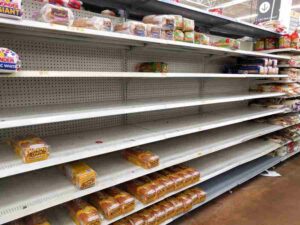
5. ⚠️ Out-of-Stock Monitoring (OOS): Out-of-stock situations are among the most damaging execution failures — generating direct lost sales and pushing shoppers to competitor products.
How to measure retail execution
The most effective brands track a core set of execution KPIs in near real time:
• Compliance rate — % of stores meeting execution standards
• Numeric Distribution — % of stores stocking each SKU
• Share of shelf — brand space vs. total category space
• OOS rate — % of stores with a stockout
• POSM & Promotional compliance rate — % of promotions correctly installed
• Planogram compliance rate
Historically, these metrics were collected by field sales teams during scheduled store visits — slow, incomplete, and variable in quality. Today, modern retail execution platforms enable brands to collect photo-verified data across hundreds of stores simultaneously, with results delivered within days.
Common retail execution challenges for FMCG brands
• Insufficient field coverage — internal sales forces can’t visit every store frequently enough
• Data arriving too late — by the time a report lands, the promotional period may be over
• Inconsistent data quality — manual field reports vary by rep
• Difficulty scaling at peak periods — launches and seasonal activations require surge capacity that fixed teams can’t absorb
• ROI hard to prove — without reliable execution data, it’s impossible to know if trade marketing investments are generating real in-store visibility
How leading brands improve retail execution
The most competitive FMCG brands treat retail execution as a data discipline. They monitor continuously rather than auditing periodically, extend coverage beyond what their field teams can reach, and use execution data to trigger real store-level action. A gap detected today should generate a corrective visit tomorrow, not show up in a monthly slide deck.
Because execution data is only as valuable as the decisions it drives. Platforms like Roamler make this possible at European scale, helping brands such as Coca-Cola, Danone, and Unilever monitor execution across retail networks, identify gaps, and act faster than traditional field models allow.

Some frequently asked questions
Trade marketing defines the strategy: which promotions to run, which space to negotiate, which activations to invest in. Retail execution is what happens next — whether that strategy actually materialises on the shelf. A brand can have an excellent trade marketing plan and still lose revenue if displays aren’t installed, products are out of stock, or planograms aren’t respected. The two disciplines are complementary, but confusing them is expensive: trade marketing without execution measurement is essentially spend without proof of delivery.
A perfect store is a retail execution framework that defines the minimum standards a product or brand must meet at a given point of sale to be considered “perfectly” executed. It typically covers five dimensions: numeric distribution, shelf placement, share of shelf, promotional compliance, and out-of-stock rate. Each dimension has a measurable threshold, and a store only qualifies as “perfect” when all thresholds are met simultaneously. The framework is valuable less as an absolute target and more as a prioritisation tool — identifying which stores have the largest gap, and where closing it will have the greatest commercial impact.
Poor retail execution rarely has a single cause. The most common culprits are structural: internal field teams can’t cover every store with sufficient frequency, data arrives too late to trigger meaningful action, and there’s no systematic way to verify that centrally agreed plans are being implemented locally. Seasonal peaks and new product launches amplify these gaps, as fixed field resources can’t scale on demand. Underneath most execution failures is the same problem — the brand doesn’t have reliable, timely visibility into what is actually happening store by store.
A planogram is a visual diagram that specifies exactly how products should be arranged on a shelf — which SKU goes where, at what height, with how many facings. Planogram compliance measures whether that agreed arrangement is actually being respected in store. Low compliance means products are in the wrong position, facings are reduced, or competitor products have encroached on agreed space. Since shelf placement directly influences purchase likelihood, non-compliance translates directly into lost sales — making planogram compliance one of the most commercially sensitive retail execution KPIs.