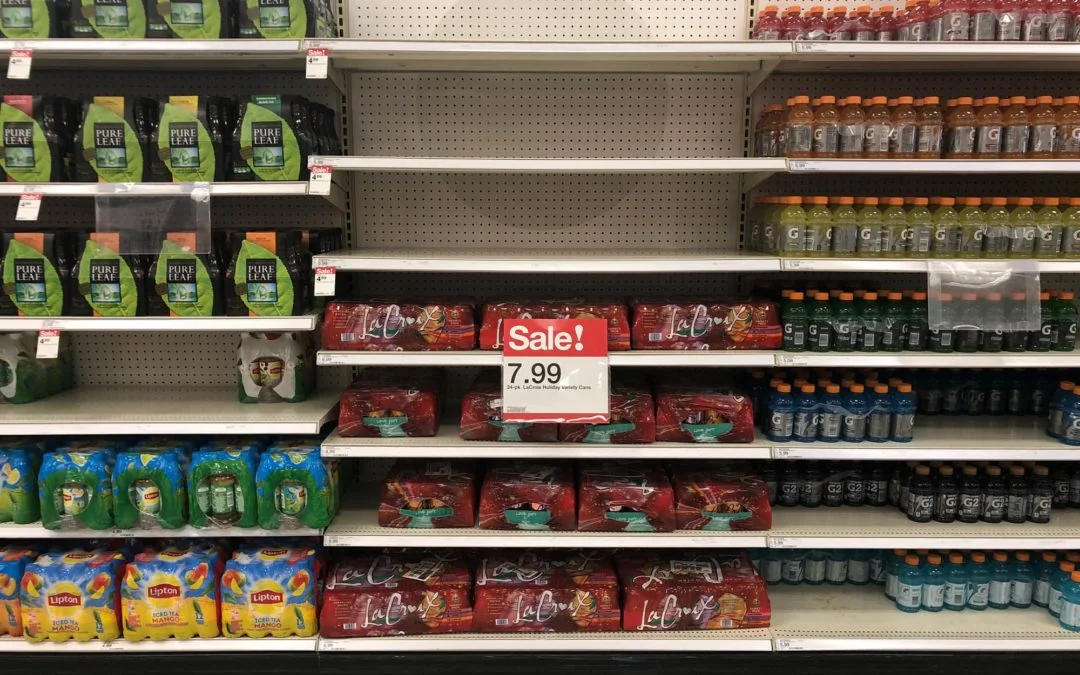
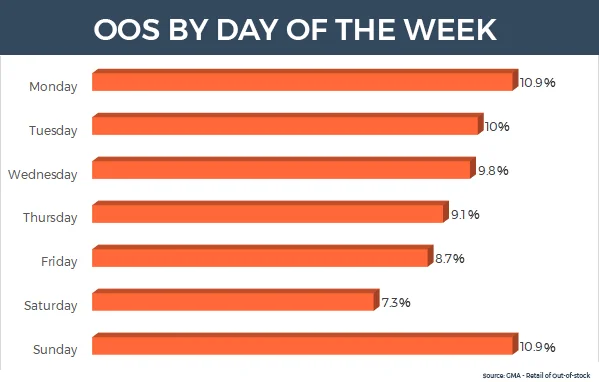
According to a study conducted by the Grocery Manufacturers Association (GMA), the European out-of-stock (OOS) rate is around 8.6%. This increases during early evening hours and on specific days of the week — most OOS situations occur on Sunday. During the week, restocking and preparation for Saturday and Sunday promotions keep the rate lower. Although Saturday is the busiest day for grocery shopping, it has the lowest OOS rate, as retailers normally put on extra staff to replenish shelves and stocks of promotional items.
The Factors Influencing OOS
Promotions strongly influence out-of-stock rates. According to several studies conducted over the years, OOS rates tend to be twice as high on promoted items. In general, the amount of discount offered during a promotion corresponds to the OOS rate.
The velocity of product movement is another factor. Fast-moving goods — whether promoted or not — tend to have an OOS rate 50% to 80% higher than other products.
How Do Consumers Respond to OOS Situations?
There are five primary responses when the product a shopper intends to buy is out of stock:
- Buy the item at another store
- Postpone the purchase at the same store
- Substitute the item with a different size or type of the same brand
- Switch to a similar product from another brand
- Do not purchase the item at all
Every one of these responses has negative consequences and results in losses for both retailers and manufacturers. Worldwide, the average sales loss due to OOS is 3.9%.
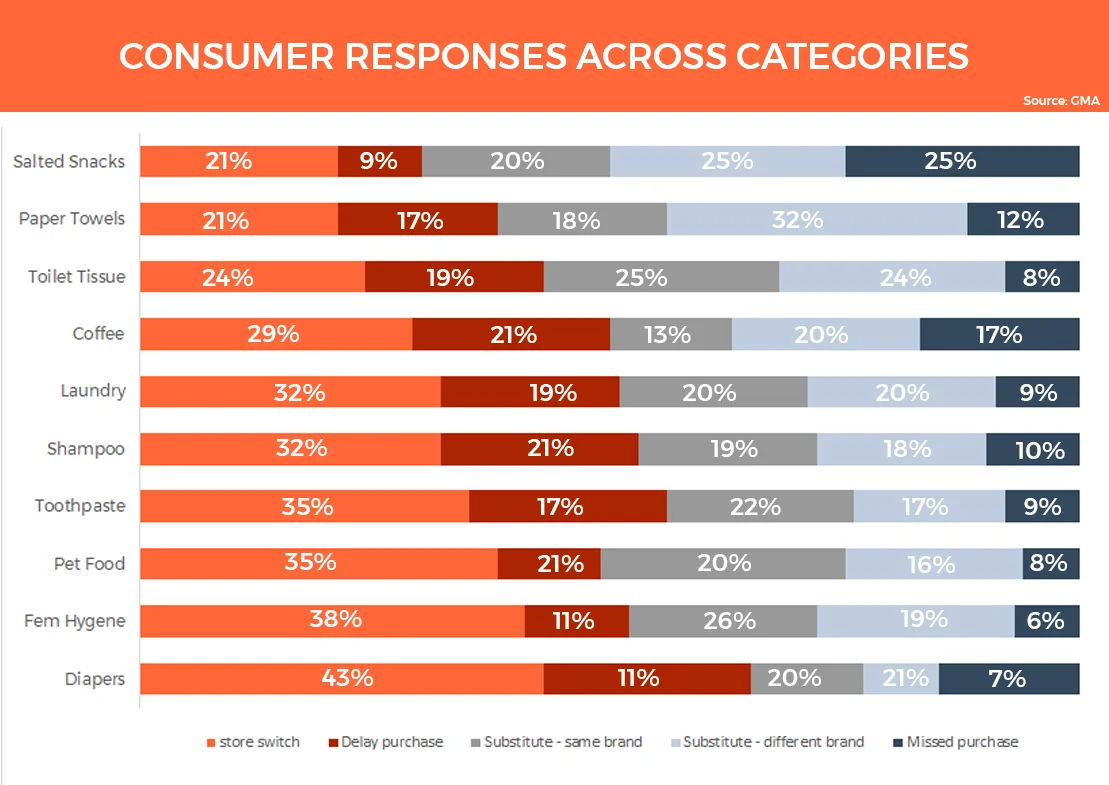
Consumer response also differs by product category. Toilet paper sees high levels of substitution, whereas feminine hygiene products and diapers show very high levels of store-switching and low levels of delayed purchase. The salty-snack category has the highest level of consumers not making the purchase at all.
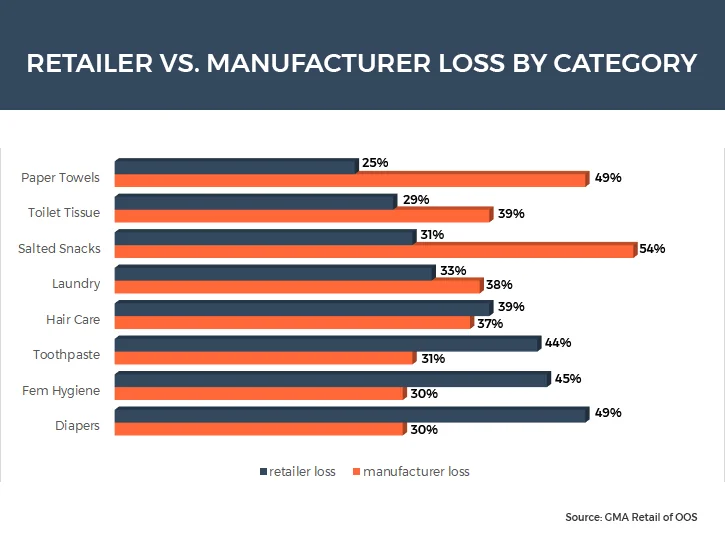
The different responses generate different kinds of losses for retailers and manufacturers. In general, the categories of greatest loss to retailers have the least effect on the manufacturer, and vice versa. In addition, when a consumer substitutes a product because of an OOS situation, the tendency in a brand switch is to buy down, both in size and price.
The Most Common Causes of an Out-of-Stock Situation
According to several studies, about one third of OOS situations can be attributed to replenishment problems — that is, having the product in-store but not getting it onto the shelves. A further fifth of OOS occurrences are due to planning decisions, including inadequate shelf-space allocation and low planogram compliance. Together, those two causes account for roughly half of all OOS occurrences.
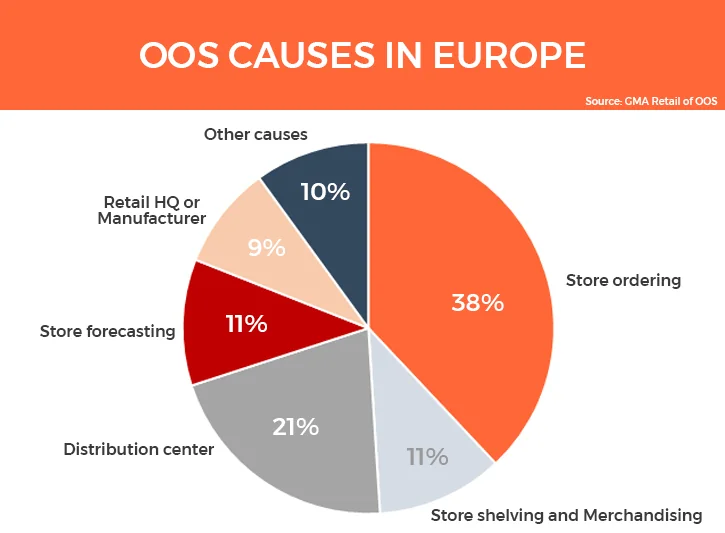
Globally, Europe has the highest share of replenishment problems, which stem from store practices: infrequent, late or missed shelf filling, poor planogram execution, insufficient staff, or congested back rooms where stock is either not found or damaged before it reaches the shelf.
Solving OOS Challenges
On-demand in-store merchandising checks can help retailers discover OOS situations and fix them before they impact sales and customer satisfaction.
With real-time access to data on shelf health, availability and promotion execution, retail professionals can identify the issues that compromise the customer journey and act on them quickly and cost-efficiently.
Our on-demand community can easily share insights and photos from any store, and take action on demand.
Want to Bring Your Out-of-Stock Rate Down?
We'll show you where your gaps are, store by store, and how quickly they can be closed.
Get in touch with our experts