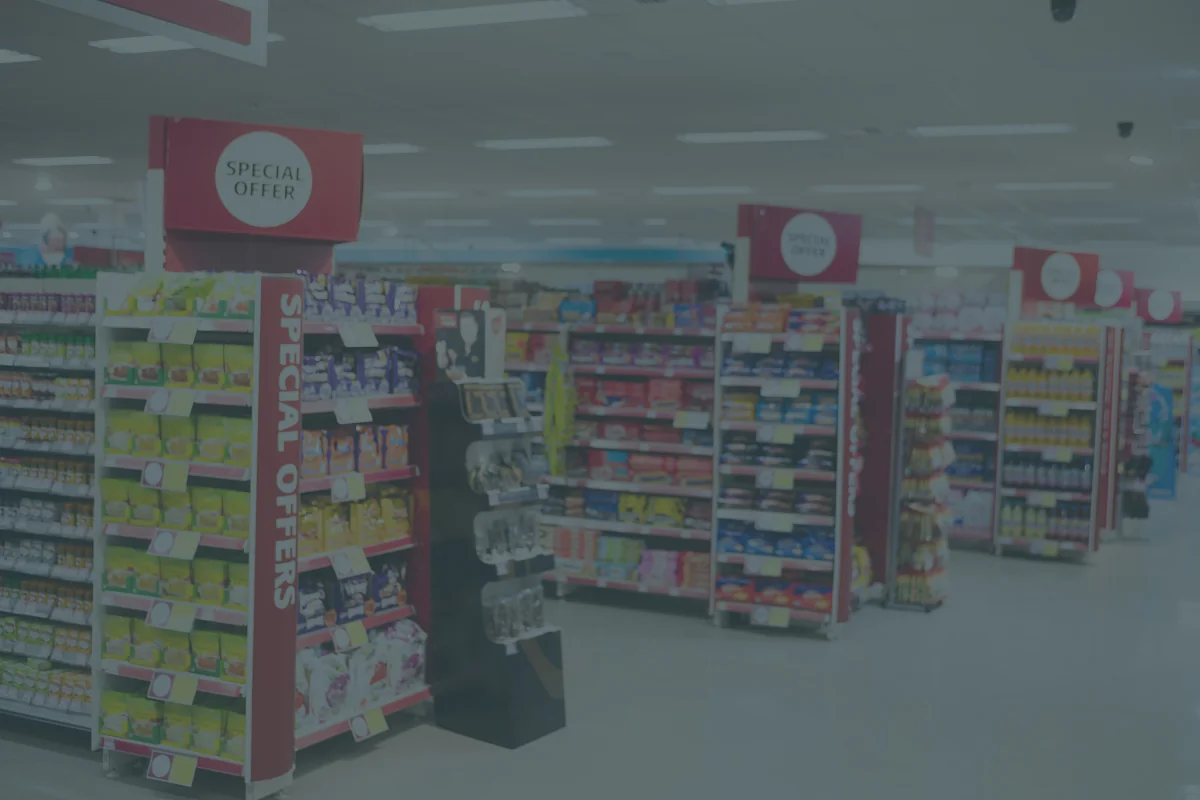
Keeping a promotional display well stocked, correctly signed and correctly priced is what separates a promotion that works from one that quietly does not. Industry research has attributed substantial sales lifts to well-executed trade promotions.
Point-of-purchase displays carry a lot of that weight. They create urgency at the moment of decision, and an effective programme translates into a measurable increase in basket size. The difficulty is not designing the display — it is getting it built, correctly, in every store, on time.
The Gap Between Planned and Executed
Brands consistently overestimate how well their promotions are executed. Shop!'s Compliance Initiative Study found CPG companies estimating in-store compliance at around 70% when the measured rate was 40%. Nielsen has put retail promotional compliance as low as 30%.
Those figures come from different studies with different scopes and they do not reconcile precisely. What they agree on is the direction: measured compliance sits far below what brands assume, and the gap is wide enough to change the economics of a promotion.
Some Display Types Execute Better Than Others
POPAI research finds compliance varies significantly by display format. The pattern behind it is straightforward: the more SKUs a display carries, and the more channel environments it has to work across, the harder it is to execute consistently.
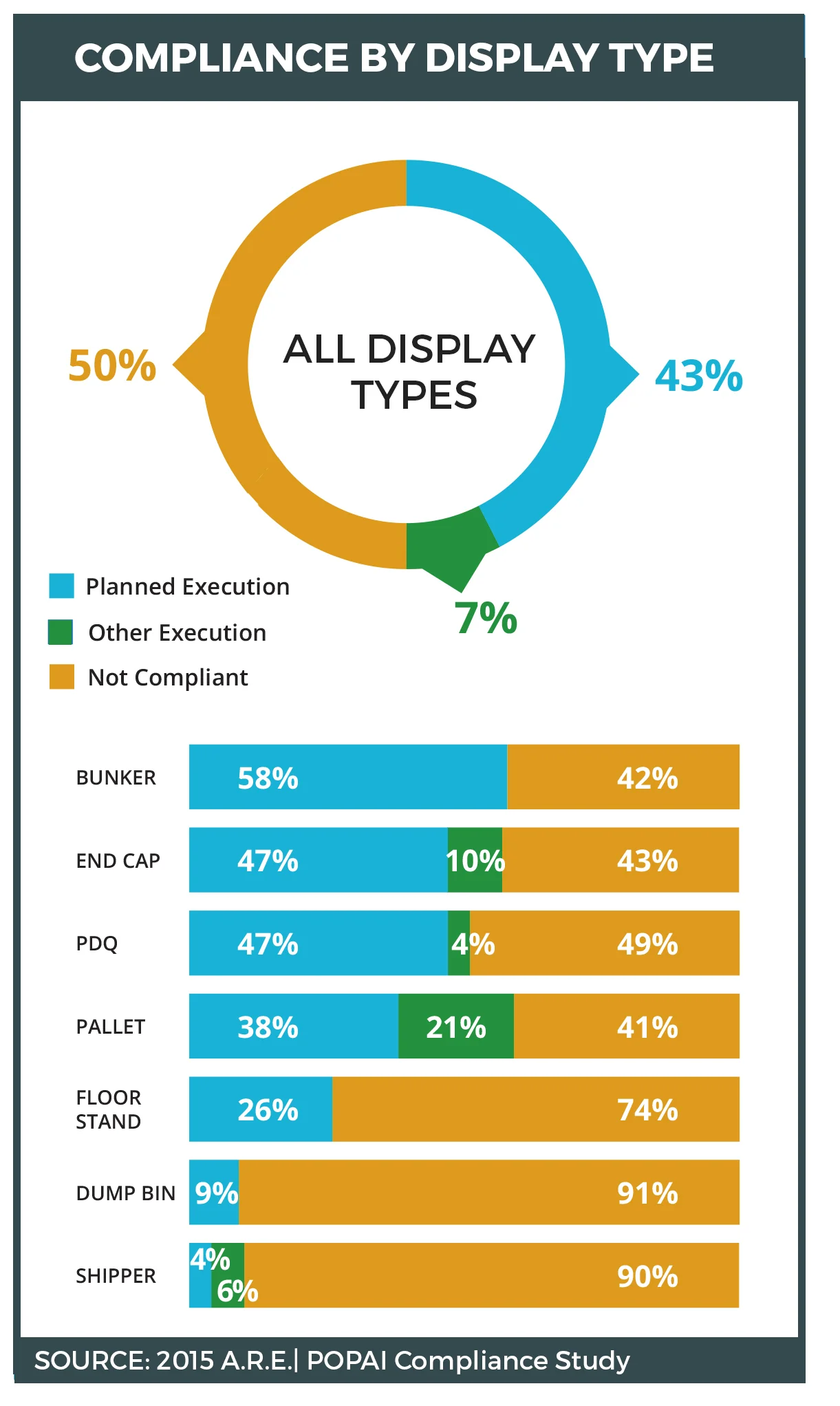
Source: 2015 A.R.E. | POPAI Compliance Study.
Who Actually Builds the Display
Most CPG marketers cannot fund a dedicated sales force and rely on brokers or service merchandisers to execute their point-of-purchase programmes. The question is whether that delivers.
According to the A.R.E. and POPAI compliance study, brokers fail to execute as planned in 53% of cases — and are still the most reliable of the options studied. That is the uncomfortable finding: the best available route leaves roughly half of planned promotions unexecuted or incorrectly executed.
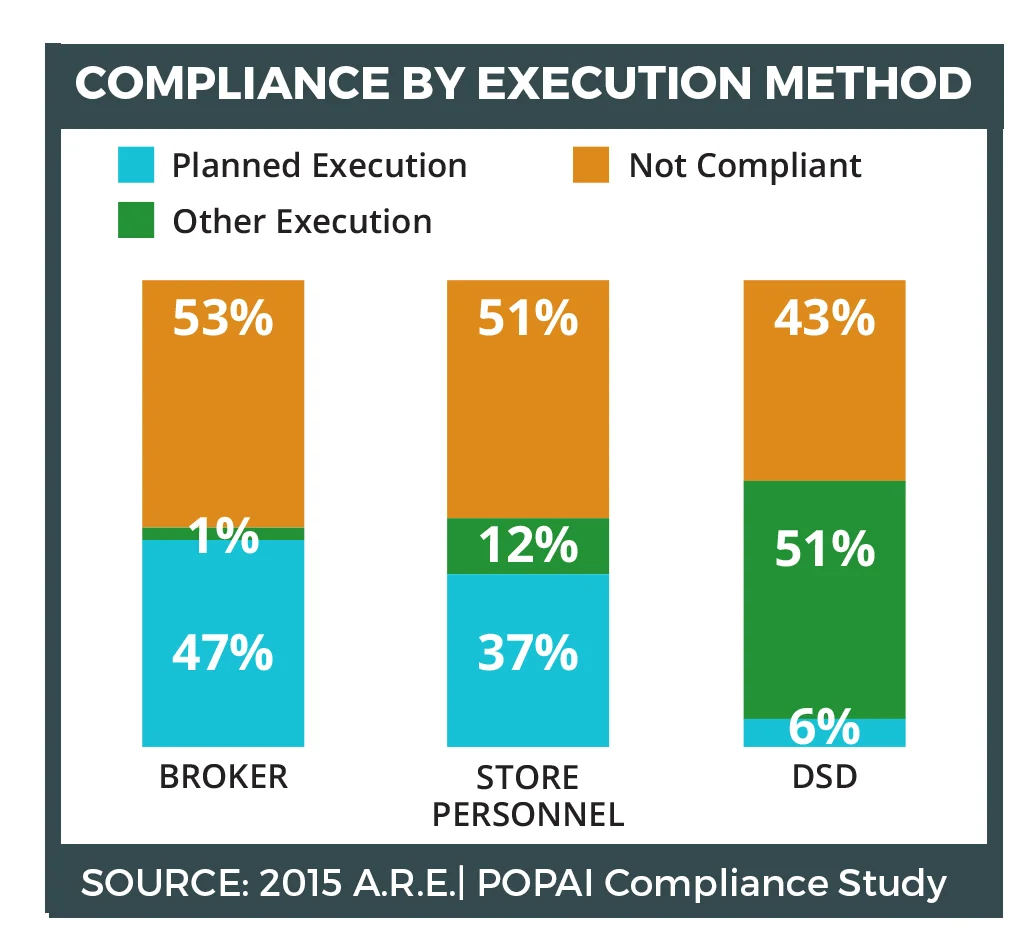
Source: 2015 A.R.E. | POPAI Compliance Study.
A Different Approach to Execution
Roamler has spent ten years applying flexible, data-driven resourcing to field marketing, including the execution and monitoring of displays and promotions.
The model works from an on-demand community of experienced shoppers and merchandisers across Europe. Because members are already close to the outlets that need attention, a merchandiser can be in the field within 24 hours — which is the difference between correcting a display while the promotion is running and discovering the problem in the post-campaign review.
Across our promotion execution programmes, we work to an average compliance rate of 91%.
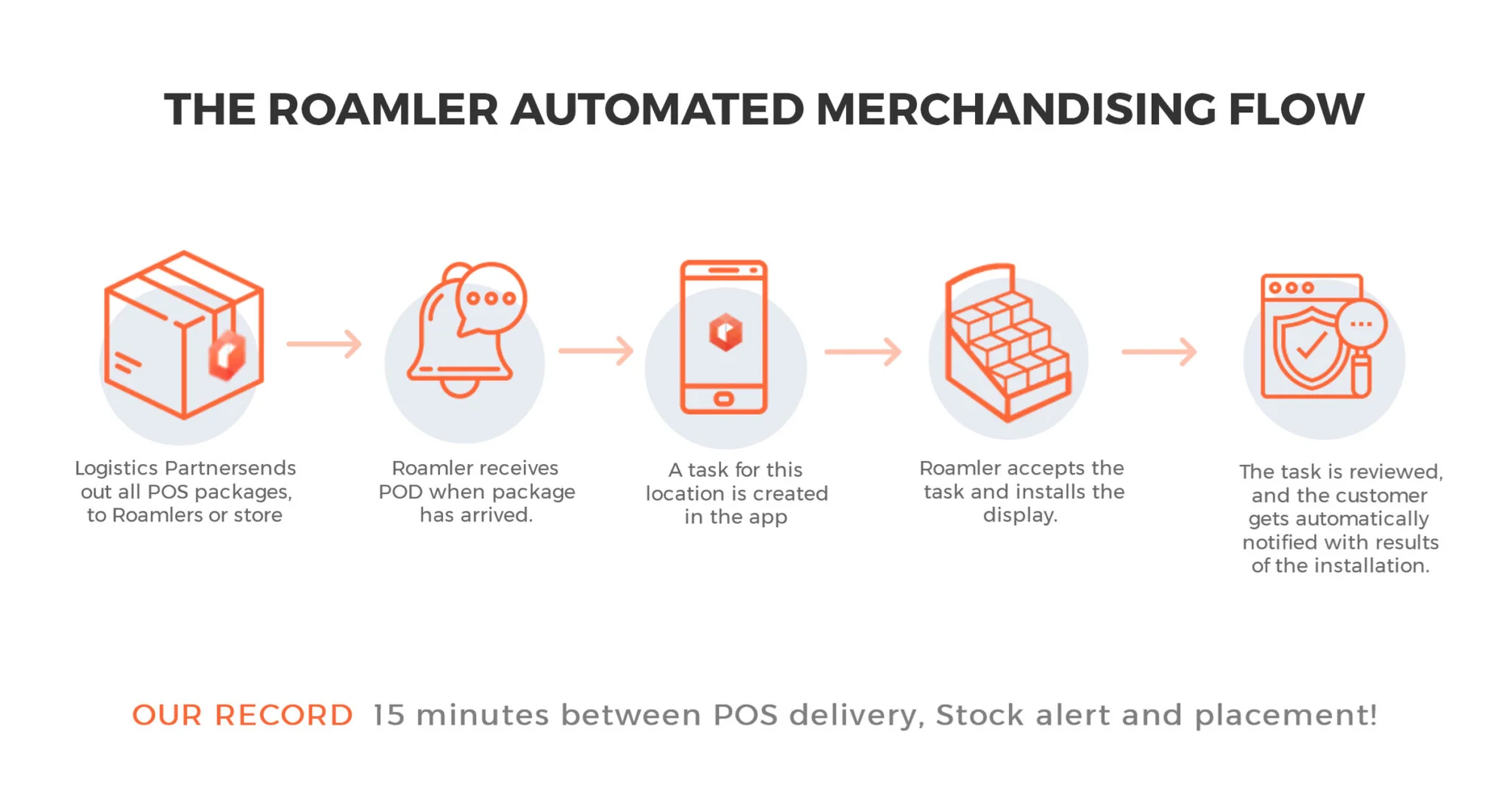
Our record: 15 minutes between POS delivery, stock alert and placement.
Our on-demand merchandisers can act on the POSM that needs attention before it costs you the sale.
Want to Raise Compliance on Your Displays and Promotions?
We'll walk you through how execution monitoring and on-demand correction would work across your own network.
Contact us