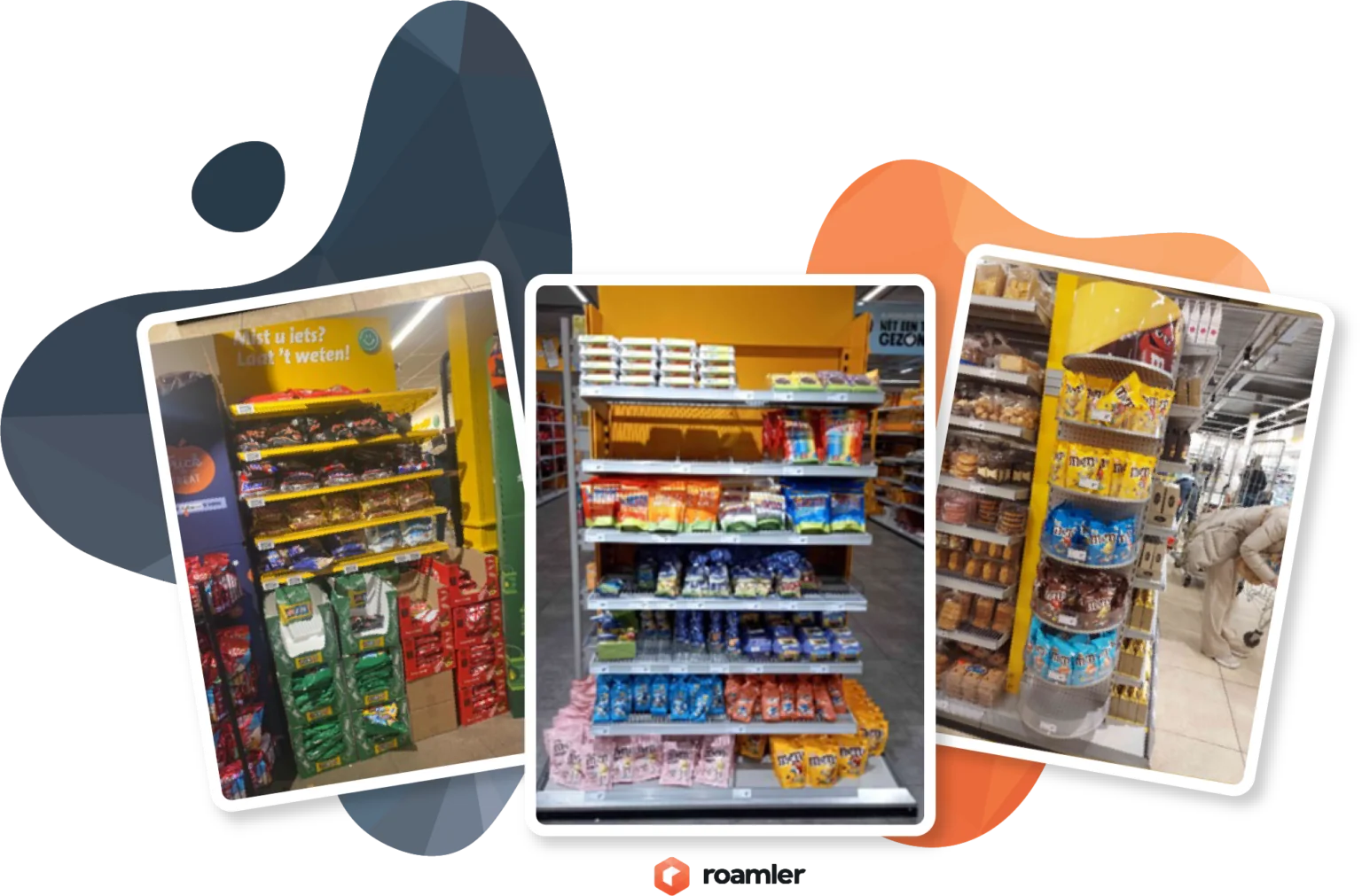
With resources under pressure and wages rising, keeping shelves reliably stocked has become harder for retailers. For manufacturers and retailers alike, getting full value out of every investment matters more than it did — and promotional sales is where the largest gap between intention and outcome still sits.
Executed properly, a promotion pays both sides: contribution for the retailer, turnover for the manufacturer. The question is what the display actually looks like on the shop floor today. Are the products still in the promotional location? Most manufacturers cannot say. They depend on the retailer to execute, and a great deal of uncertainty gets quietly accepted.
The contrast with online is stark. For a digital promotion, a manufacturer knows precisely how execution went: whether the URL resolves, which creative draws attention, how many clicks it earned. Offline, none of that is visible. Sales are lost to poor execution at a moment when the data to prevent it has never been more accessible.
What Twelve Years of Monitoring Shows
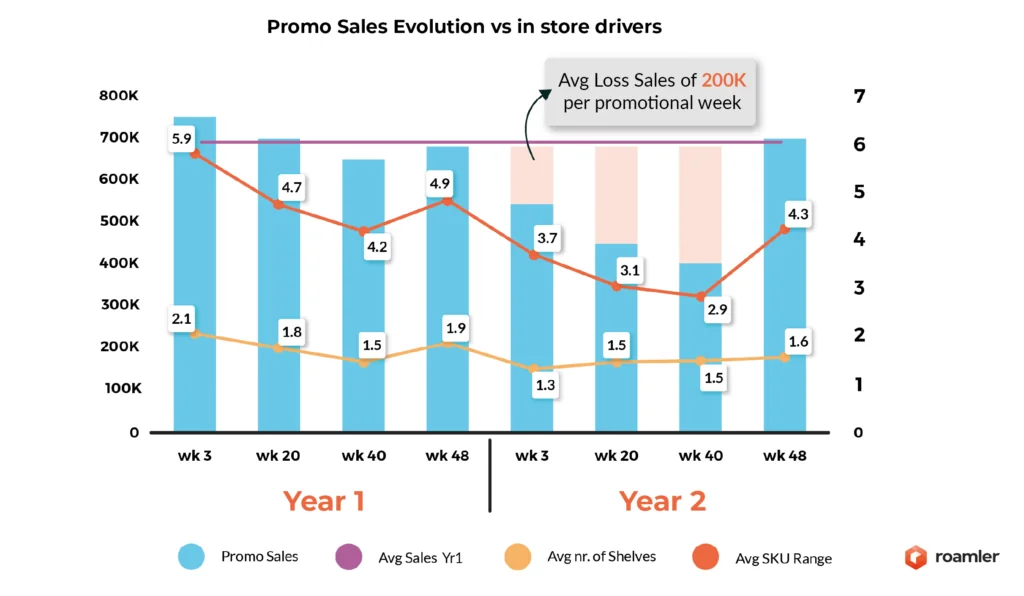
We have monitored in-store promotions for twelve years. Execution scores of 80% or above remain the exception, and in the weakest cases the score does not clear 40%. Out-of-home performs worse still. One tracked programme illustrates the cost of that gap directly: across two years of promotional weeks, poor in-store execution was associated with an average loss of 200K in sales per promotional week.
The 1% Approach
There is a straightforward alternative. Suppose you knew exactly how every promotion had been executed in store, while it was still running.
Promotional insights gathered by our on-demand community make that data quick and broad to collect. We call it the 1% approach: add around 1% to the promotional budget — often less — to fund the visibility needed to protect the other 99%. Combined with sales figures and targeted analysis, it turns each promotion into something you can improve rather than only report on.
What It Changes
- Higher resale. On a promotion running several weeks, checking execution in the opening days is what pays. Where a display is underperforming, it can be fixed immediately — and the additional sales land inside the promotional window rather than after it.
- Continuous learning. A/B testing mechanics reveals what works within a single promotion, and which materials perform in which store formats. Those learnings compound across campaigns — more sales, or the same sales at lower cost.
See How Your Promotions Are Actually Executed
Our on-demand community checks promotional execution across your network while the promotion is still live — early enough to act on.
Contact us