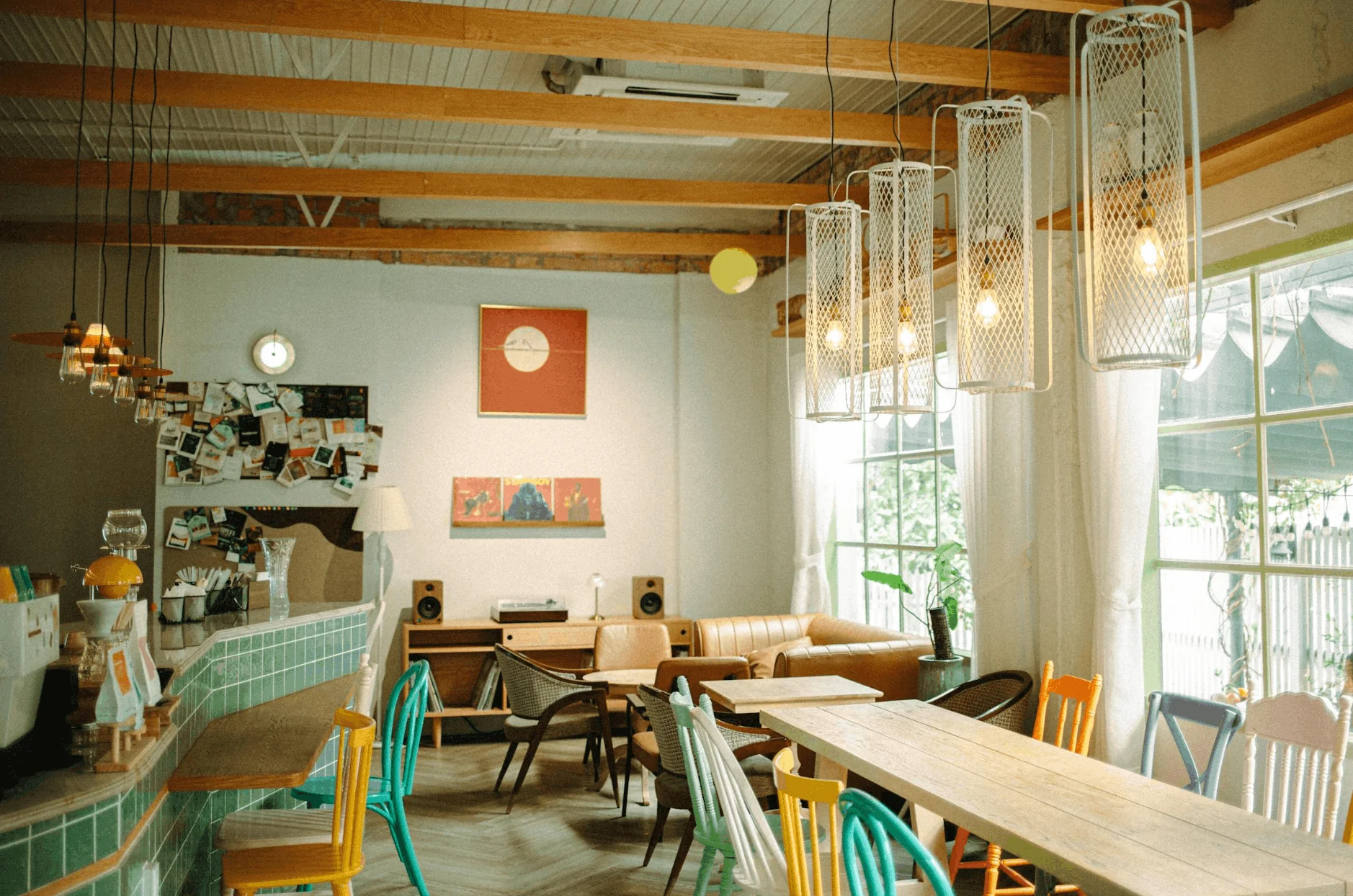
Definition: What Is the HoReCa Channel?
HoReCa — Hotels, Restaurants, and Cafés — is the industry shorthand for every commercial venue where food and drink are consumed on the premises, rather than bought to take home. The same channel is also called Out-of-Home (OOH, the broadest version of the term), on-trade (mostly used in beverages, as the counterpart to retail's "off-trade"), or Foodservice (a wider label covering commercial food and drink preparation generally).
In practice, the channel covers six broad segments:
- Hotels — business hotels, boutique hotels, resorts, hostels
- Restaurants — casual dining, fine dining, fast food, QSR chains
- Cafés & coffee shops — independent cafés, coffee shop chains, tea rooms
- Bars & pubs — traditional bars, cocktail bars, sports bars, pubs
- Canteens & institutional — corporate catering, hospitals, universities, transport hubs
- Event & leisure venues — stadiums, cinemas, concert halls, festival sites
Why the HoReCa Market Deserves a Closer Look
☕ It's where brand preference is formed. A consumer who discovers a beer brand in a bar, a coffee brand in a café, or a sparkling water on a restaurant table is experiencing that brand in a high-attention, social context. The on-premise occasion generates brand associations that influence subsequent retail purchasing.
📈 The market is constantly evolving. Roamler's Foodservice Database, tracking over 3 million outlets across Europe, shows that while traditional bars and cafés have declined slightly since 2019 (-4.9% across six European markets), coffee shops have grown by +41% over the same period. The HoReCa market is constantly transforming. Brands that map their distribution against the current outlet landscape have a significant competitive advantage.
💶 It commands premium pricing. Consumers pay significantly more for a product consumed in a HoReCa setting than the same product purchased in a supermarket. A beer sold on-trade typically commands 3–5x the off-trade price. This makes on-premise distribution disproportionately valuable for revenue and margin, particularly for premium brands seeking to justify a higher price point across all channels.
🔍 It's a white space opportunity. Unlike retail, where shelf space is finite and highly contested, the HoReCa market contains hundreds of thousands of outlets, many of which are not yet covered by any systematic brand distribution effort. Identifying and activating the right outlets is a significant growth opportunity for brands with the data to map it.
The HoReCa Channel vs. Retail: Key Differences
| HoReCa / On-Trade | Retail / Off-Trade | |
|---|---|---|
| Consumption | On-premise | At home |
| Purchase decision | Often staff-influenced | Largely shopper-driven |
| Price point | Premium | Standard |
| Brand interaction | High-attention, social | Routine, habitual |
| Distribution complexity | Fragmented, local | Centralised, structured |
| Data availability | Limited, fragmented | Panel data, EPOS |
| Key execution challenge | Mapping and activating the right outlets | Shelf presence and compliance |
The fundamental difference for FMCG brands is structural: retail distribution is managed through a small number of central buying relationships, while HoReCa distribution is built outlet by outlet, across a highly fragmented and constantly evolving market.
How FMCG Brands Win in the HoReCa Channel
- Map the market before entering it. The first challenge in HoReCa is simply knowing what's there. Unlike retail, where retailer databases provide a structured outlet list, the HoReCa market has no central registry. Brands that rely on outdated directories or manual prospecting miss significant portions of the opportunity. A live, continuously updated outlet database, covering outlet type, location, size, and commercial characteristics, is the foundation of any effective HoReCa strategy.
- Identify white space systematically. Not all outlets are equally valuable. The most effective HoReCa strategies combine outlet mapping with commercial prioritisation, identifying which uncovered outlets have the highest potential based on format, location, footfall indicators, and category fit.
- Activate with a structured field approach. Once target outlets are identified, activating them requires a field team with the right tools: visit scheduling, structured sales protocols, on-site data capture, and performance tracking. Sales Force Automation (SFA) tools like Roamler's Salesmapp bring the same data-driven discipline to HoReCa field teams that the best retail execution teams apply to their store networks.
- Monitor execution continuously. Distribution won in HoReCa can be lost quickly: an outlet changes ownership, a competitor activates first, a product is removed from the menu. Continuous monitoring of outlet status, distribution presence, and execution quality is essential for maintaining and growing a HoReCa position.
Some Frequently Asked Questions
What does HoReCa stand for?
Hotels, Restaurants, and Cafés — the standard European industry term for commercial venues where food and drink are consumed on-site. It's used more or less interchangeably with Out-of-Home, on-trade (in beverages specifically), and Foodservice, though each carries a slightly different shade of meaning depending on category and market.
What's the difference between HoReCa and Foodservice?
They overlap heavily but aren't identical. HoReCa refers specifically to hotels, restaurants and cafés. Foodservice is the broader umbrella, adding institutional catering, transport catering, and vending on top of the core HoReCa formats. In practice, FMCG food and beverage brands tend to say "HoReCa" for their on-trade channel, while ingredient and packaging suppliers lean toward "Foodservice."
Why does HoReCa matter specifically for beverage brands?
Three reasons: it's where premium pricing is easiest to capture, since a drink consumed on-site commands far more than the same product bought in a supermarket; it's where staff recommendation and visibility shape preference directly, in a way a supermarket shelf can't replicate; and it's frequently where new launches and premium variants get tested and built before they scale into retail.
How fragmented is HoReCa compared to retail?
Considerably more. In grocery retail, a brand can reach most of its volume through relationships with a handful of major retail groups. In HoReCa, that same volume is spread across tens of thousands of independently-owned outlets, each deciding for itself — Roamler's Foodservice Database alone tracks over 3 million of them across Europe.
Map, activate and win the HoReCa channel
Roamler gives FMCG brands a live map of 4M+ European outlets, the tools to find distribution white space, and the field execution to activate and monitor it.
Get in touch