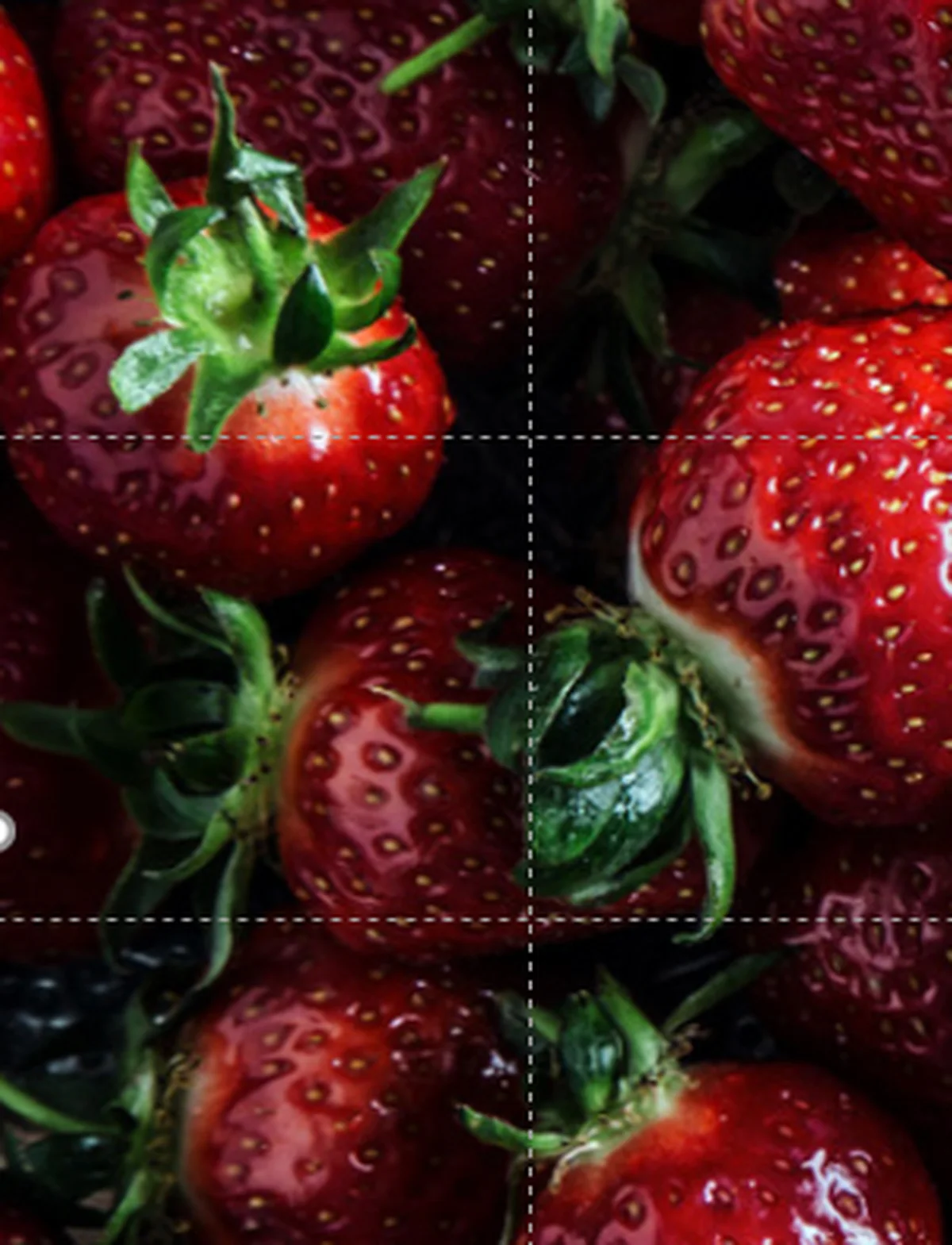
Strawberries are one of the few categories where the product sells itself — provided it looks right. Appearance carries almost as much weight as price in the purchase decision, which makes shelf condition a commercial variable rather than an operational detail.
How we collected the data: 3,808 respondents across Italy, Spain, Belgium, the Netherlands, Germany, France and the United Kingdom, surveyed through our community in March 2019. The findings concern consumption habits and purchase criteria, which have proved stable over time.
Near-Universal, but Not Year-Round
93% of respondents eat strawberries — only 7% never do. Frequency varies far more than penetration, and it is the "rarely" third that is most seasonal.
Strawberry consumption frequency. Base: 3,808 respondents, March 2019.
The Season Is Not the Same Season Everywhere
Across Europe, consumption peaks in summer (67%) and spring (60%), concentrated in May, June and July. Two markets break the pattern, and both matter for planning:
- Spain (82%) and Italy (83%) peak in spring rather than summer — the only two markets that do. Domestic harvests arrive earlier, and the promotional calendar should follow.
- The United Kingdom is the outlier on the other axis: 53% eat strawberries all year round against a European average of 19%. British consumption is effectively de-seasonalised.
A single pan-European seasonal plan will therefore miss on both ends — too late in Iberia, and unnecessarily narrow in the UK.
Appearance Is Worth Almost as Much as Price
Freshness first, then price and red colour separated by a single point. Two of the top three criteria are things the shopper judges by looking at the punnet.
Factors influencing the purchase decision. Multiple answers possible, so shares do not total 100%. Base: 3,808 respondents.
That has a direct operational consequence. In most categories, poor shelf condition costs a brand some visibility. Here it costs the sale outright — a punnet that has been sitting too long fails on 71% and 61% of the decision at once, and no promotion recovers it. Rotation, temperature and facing quality are doing more work than price positioning.
Organic sits at 12%, low for a fresh category. Origin splits sharply: Italy (47%) and France (44%) want nationally produced fruit, while the UK (13%) and Netherlands (17%) care least. Overall, 31% buy only domestic, 33% are indifferent, and 22% say it depends on the season.
Supermarkets, Then Markets and Farm Shops
This is one of the few categories where alternative channels hold real share — and where a meaningful slice of the market supplies itself.
Where strawberries are bought. Multiple answers possible. Base: 3,808 respondents.
The 16.5% who grow their own matter more than the figure suggests: self-supply peaks in exactly the weeks when retail volume is highest, so those households leave the market at the top of the season.
Spain is the exception on channel: 69% buy at farm shops against a European average of 32%. Any Iberian distribution plan built on supermarkets alone is addressing well under half the purchase occasions.
Weekly, in 500-Gram Packs
During the season, 42% buy once a week and most spend between five and ten euros. On pack size, the 500-gram format dominates — but roughly a quarter of shoppers have no preference at all.
Preferred pack size during the season. Base: 3,808 respondents.
That 24% is the group promotional mechanics actually reach. Everyone else has a fixed format preference, which makes availability of the right size more valuable than a discount on the wrong one.
How They Get Eaten
Taste is the overwhelming reason for buying (95%), ahead of refreshment (53%) and the appeal of a seasonal fruit (47%). Only 8% dislike them raw.
Preparation and consumption occasions. Multiple answers possible. Base: 3,808 respondents.
For adjacent categories, that is the useful part. Half of all strawberry occasions involve yogurt or a smoothie, and two thirds involve dessert — which makes cross-merchandising with dairy, cream and bakery a more direct lever than anything within the fruit fixture itself.
One national quirk: in the Netherlands, 59% eat strawberries on bread or toast, against 13% across Europe.
What This Means in Store
- Shelf condition is the primary lever. Freshness and colour together outweigh price. Rotation and cold chain protect revenue more reliably than a discount does.
- Plan the season by market. Spring in Spain and Italy, all year in the UK, early summer elsewhere.
- Cross-merchandise with dairy and bakery. That is where half the consumption occasions sit.
- Promote to the 24%. Most shoppers have a fixed format preference; roughly a quarter buy on offer.
Check How Your Fresh Produce Is Presented
Our community reports on shelf condition, rotation, pricing and facing quality across stores — with photographs from every visit.
Discover In-store insights