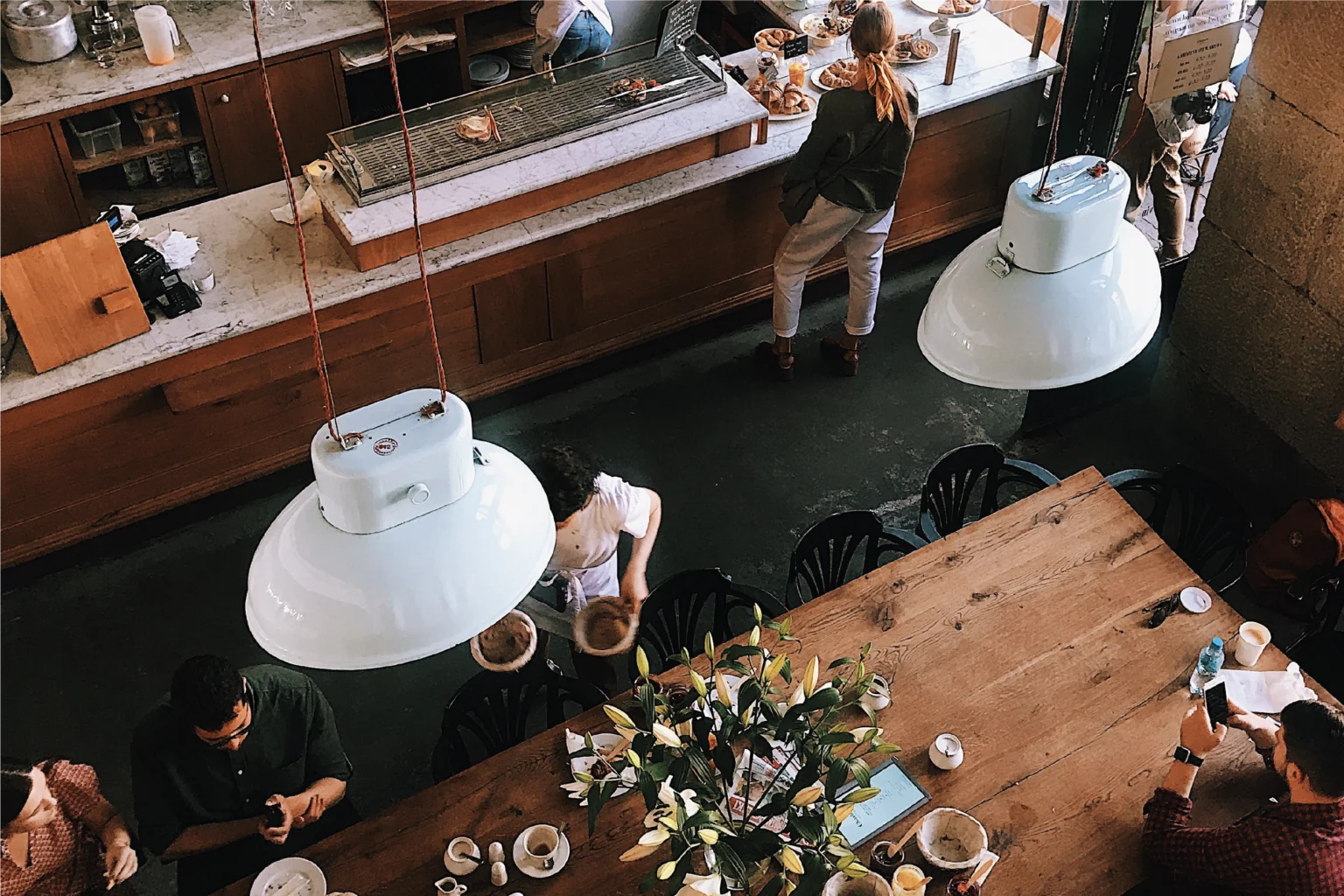
Bakeries and coffee bars have both changed substantially in recent years, adapting to shifting consumer habits and lifestyles. Here is what the data says about where both segments stand in the Netherlands today.
Scope: figures below are drawn from our Foodservice Database as of February 2024. Trend comparisons cover the preceding six months.
Bakeries
The Netherlands counts over 3,700 bakeries. The most striking development is how far the segment has moved online: 70% now maintain a digital presence, a shift visible across the past six months. That has widened their reach and changed the customer relationship, through online ordering and reviews.
Delivery has followed. Close to 30% of the bakeries that have an online presence now deliver — roughly 780 outlets nationally. It is a direct legacy of the pandemic, which accelerated the shift to online ordering across every food category.
On ownership, the segment remains largely independent, with around 30% belonging to a chain.
| Ownership | Share of bakeries |
|---|---|
| Independent | 70% |
| Part of a chain | 30% |
On the coffee they serve, beans continue to gain ground, now at 57.4% of the mix — up 5 percentage points. Freshly ground is steadily displacing the convenience of pads, cups and capsules.
Coffee Bars
The Netherlands counts over 1,400 coffee bars, and their digital presence runs higher still at 75%. Delivery is the weaker link: only 250 coffee bars offer it, around 18% of the segment against roughly 30% of connected bakeries. Half of all coffee bars have a terrace.
Beans dominate here, as you would expect, at 91.8% — though down a percentage point. Filter and fresh-brew is the segment gaining, now close to 5% of the mix, up 0.6 points.
| Bakeries | Coffee bars | |
|---|---|---|
| Outlets | 3,700+ | 1,400+ |
| Online presence | 70% | 75% |
| Beans share | 57.4% (+5 pts) | 91.8% (−1 pt) |
| Terrace | — | 50% |
Bakeries and coffee bars compared. Source: Roamler Foodservice Database, February 2024.
The gap on beans is the number worth pausing on. Coffee bars are at 91.8% and slipping slightly; bakeries are at 57.4% and climbing fast. In other words, coffee bars have already made the transition, while bakeries are still mid-way through it — which makes them the segment where a coffee supplier can still change the outcome.
How Social Media Is Reshaping Footfall
Platforms like TikTok are now a real driver of traffic for both segments. Certain outlets go viral, and queues form outside them in the larger cities, with customers prepared to wait for a particular croissant, cruffin or cookie.
These locations show up in the Roamler Foodservice Database with a high Online Consumer Activity rating, which makes it possible to identify the coffee bars and bakeries with genuine momentum right now — rather than the ones that mattered a year ago.
Conclusion
Both segments are balancing tradition against a fairly rapid modernisation. Digital presence is close to universal, delivery is establishing itself unevenly, and the coffee served is shifting towards beans — quickly in bakeries, having already arrived in coffee bars. For suppliers, the practical consequence is that these two segments are at different points on the same curve, and need to be approached differently.
Find the Outlets That Matter Right Now
Our Foodservice Database maps Dutch bakeries and coffee bars across 30+ attributes — online presence, delivery, terrace, Online Consumer Activity — and is updated continuously.
Discover the Foodservice Database