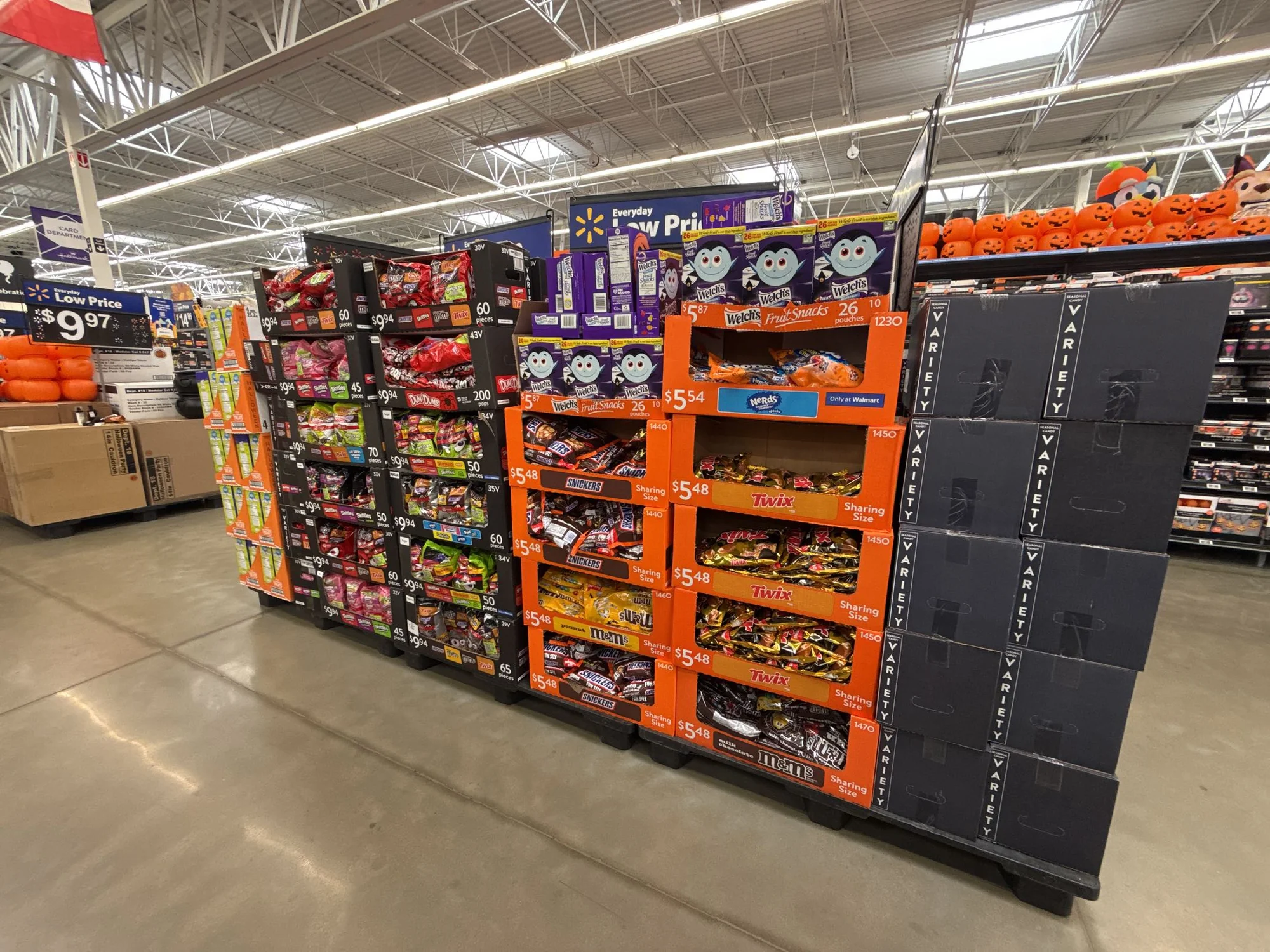
Halloween candy is not limited to the seasonal aisle. We checked 103 Target and Walmart stores across 22 states between September 29 and October 12. 86% had at least one Halloween display somewhere else in the store. Half had at least three. That's where the real competition is, and it looks different depending on which retailer you walk into.
The Seasonal Aisle Is Only the Start
Almost every store (95%) had its seasonal aisle fully set for Halloween. In the other 5%, Halloween candy was already sharing space with holiday baking and Christmas products.
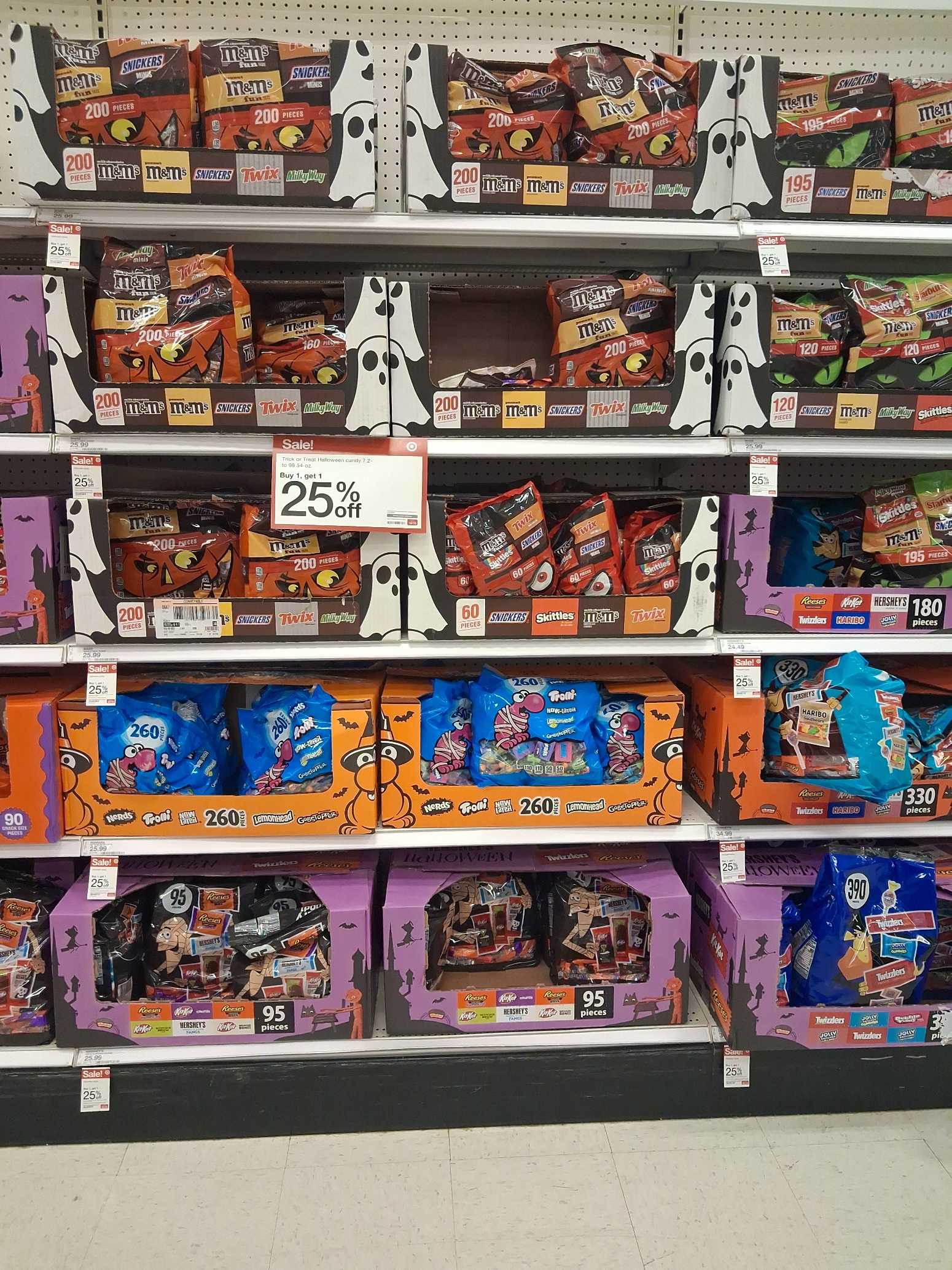
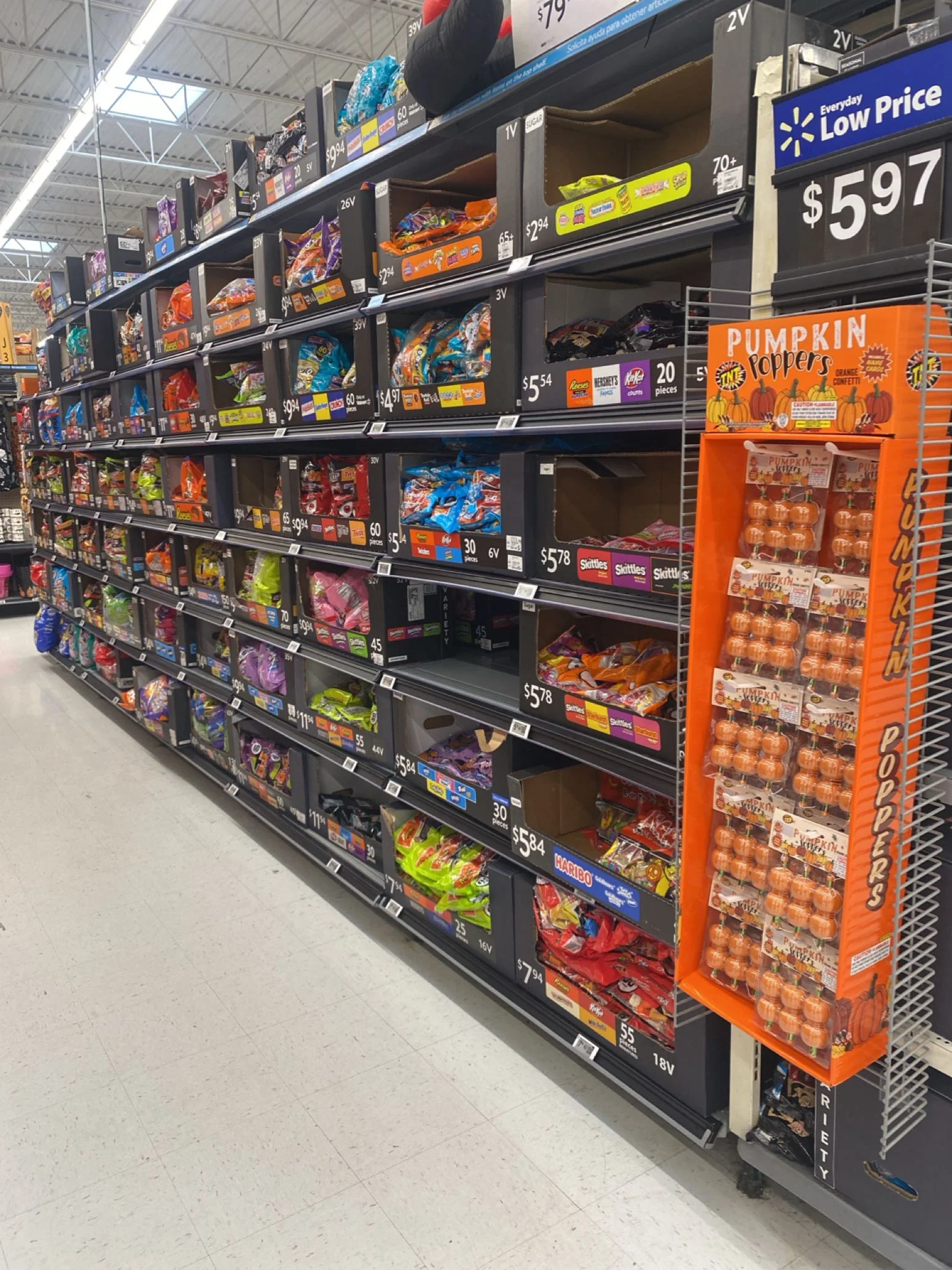
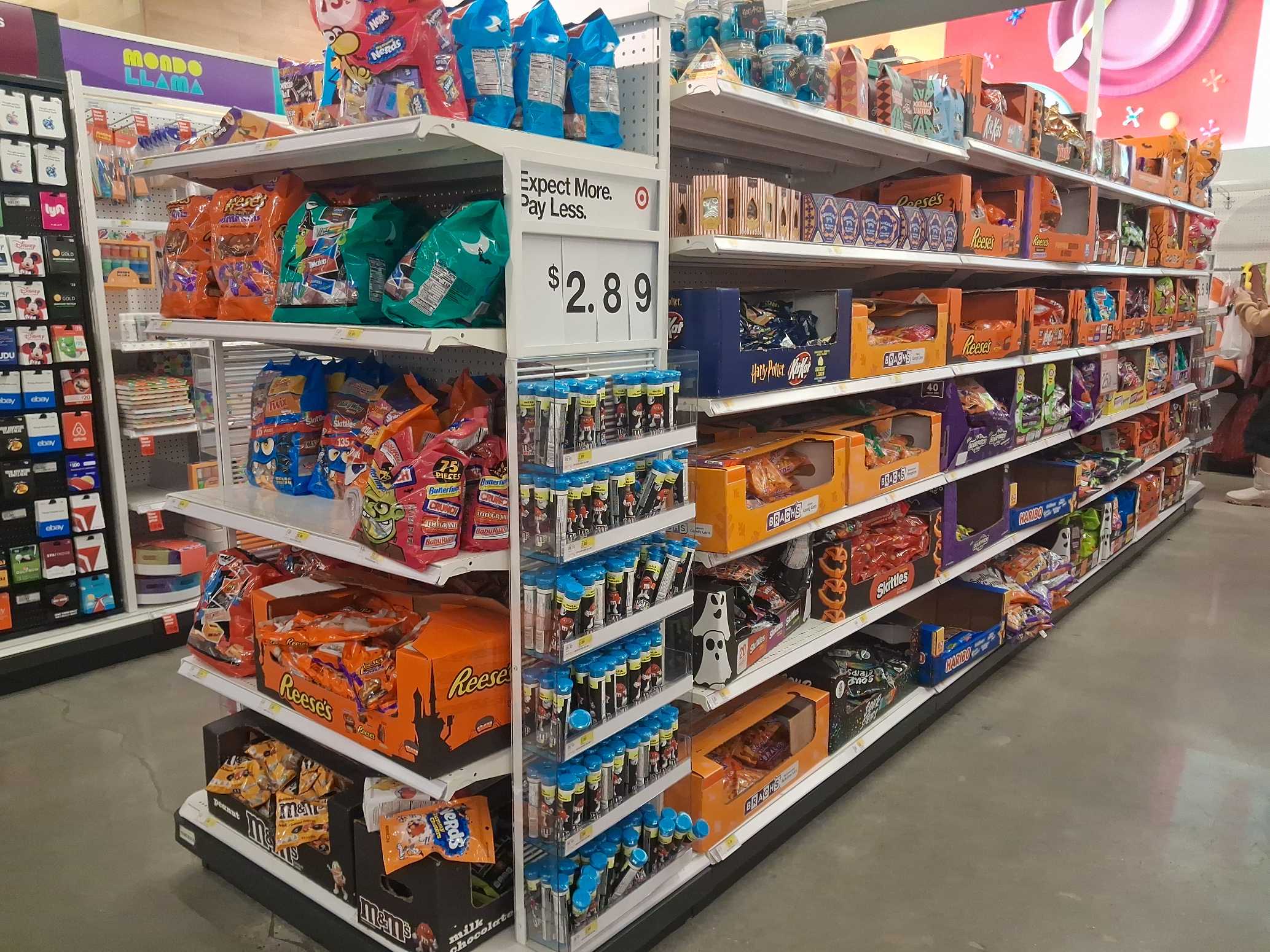
But the real competition is happening outside the seasonal aisle. Our Roamlers, the shoppers who check stores for us, recorded 210 Halloween food displays outside the seasonal aisle, at least two per store on average.
Endcaps were the most common format (40%), followed by pallets (22%), free-standing shippers (18%), permanent fixtures (13%) and dedicated front-end displays (7%).
That matters because the incremental sales come from the displays shoppers walk past on their way to something else.
Mars and Hershey's Share the Space
Source: Roamler US Halloween Seasonal Check, 103 stores, September 29 – October 12, 2026. A display can carry several brands, so shares add up to more than 100%.
Mars brands (M&M's, Snickers, Twix, Skittles and Starburst) appeared on 48% of all displays recorded, closely followed by Hershey's (Reese's, Kit Kat, Hershey's and Jolly Rancher) at 47%. Ferrara came third at 29%, followed by Mondelēz (17%) and Haribo (15%).
Mars and Hershey’s were present on a similar share of displays in most parts of the store. The biggest difference was at the front entrance: Hershey’s was on 61% of the 46 displays recorded there, compared with 50% for Mars.
The front of the store is where impulse buys happen. Winning that spot is worth more than another endcap in the candy aisle.
Two Retailers, Two Ways to Display Halloween
Both retailers had Halloween food displays outside the seasonal aisle in most stores, with an average of about two displays per store recorded at each retailer. But they used that space in different ways.
| Target | Walmart | |
|---|---|---|
| Stores checked | 48 | 55 |
| Stores with at least one display outside the seasonal aisle | 92% | 82% |
| Displays per store (average, up to 3 recorded) | 2.2 | 1.9 |
| Most common format | Endcaps (59% of displays) | Pallets (39% of displays) |
| Displays located at the entrance or checkout (any format) | 27% | 47% |
| Brands on displays | Mars 57%, Hershey's 49%, Ferrara 44% | Hershey's 45%, Mars 38%, Haribo 14% |
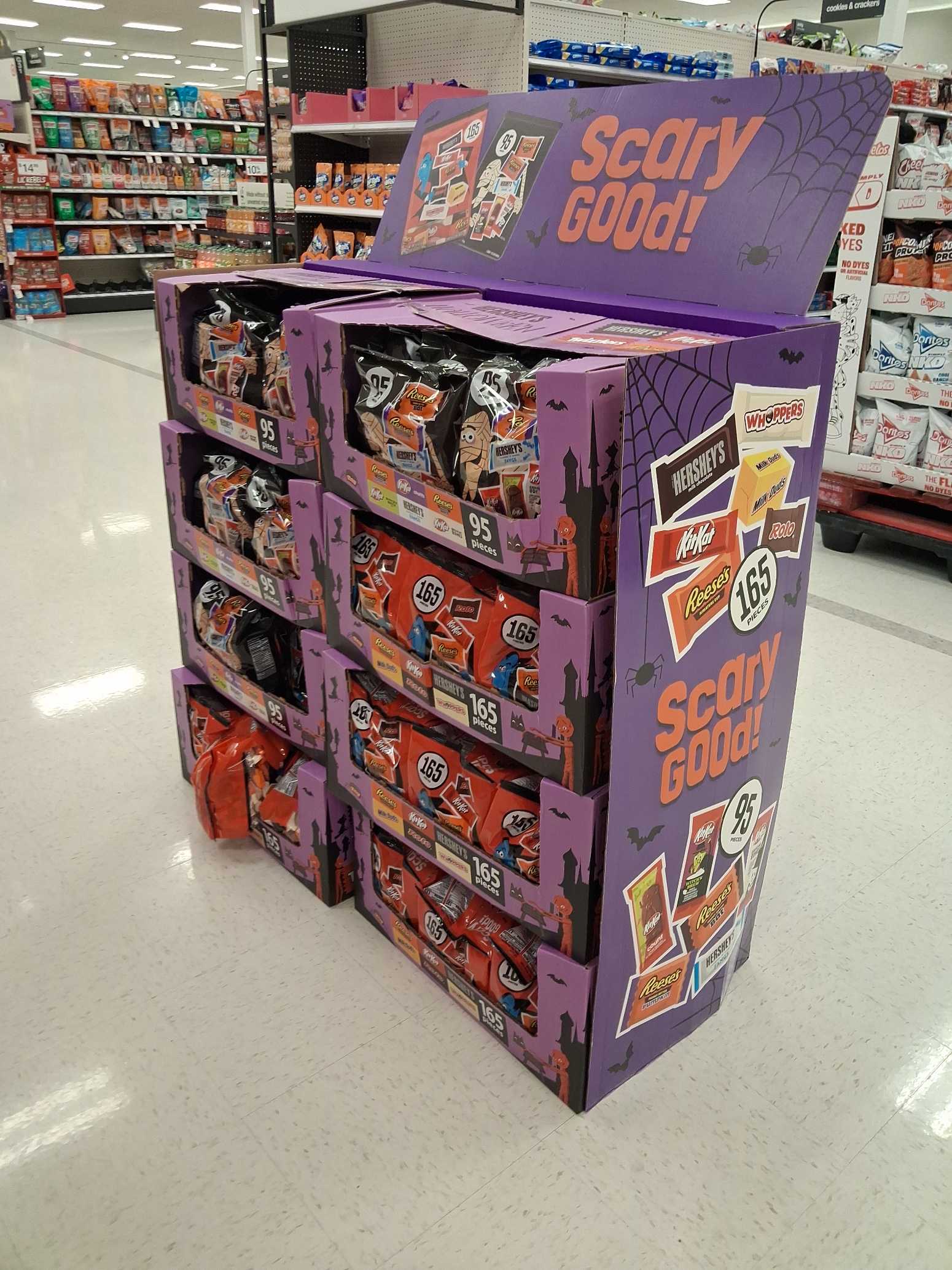
At Target, endcaps were the most common format, mainly located in the candy and grocery aisles. They also featured a broader mix of brands.
On those endcaps, you're sharing the space with competitors. Where you sit on the endcap, and how many facings you get, matters as much as getting on it.
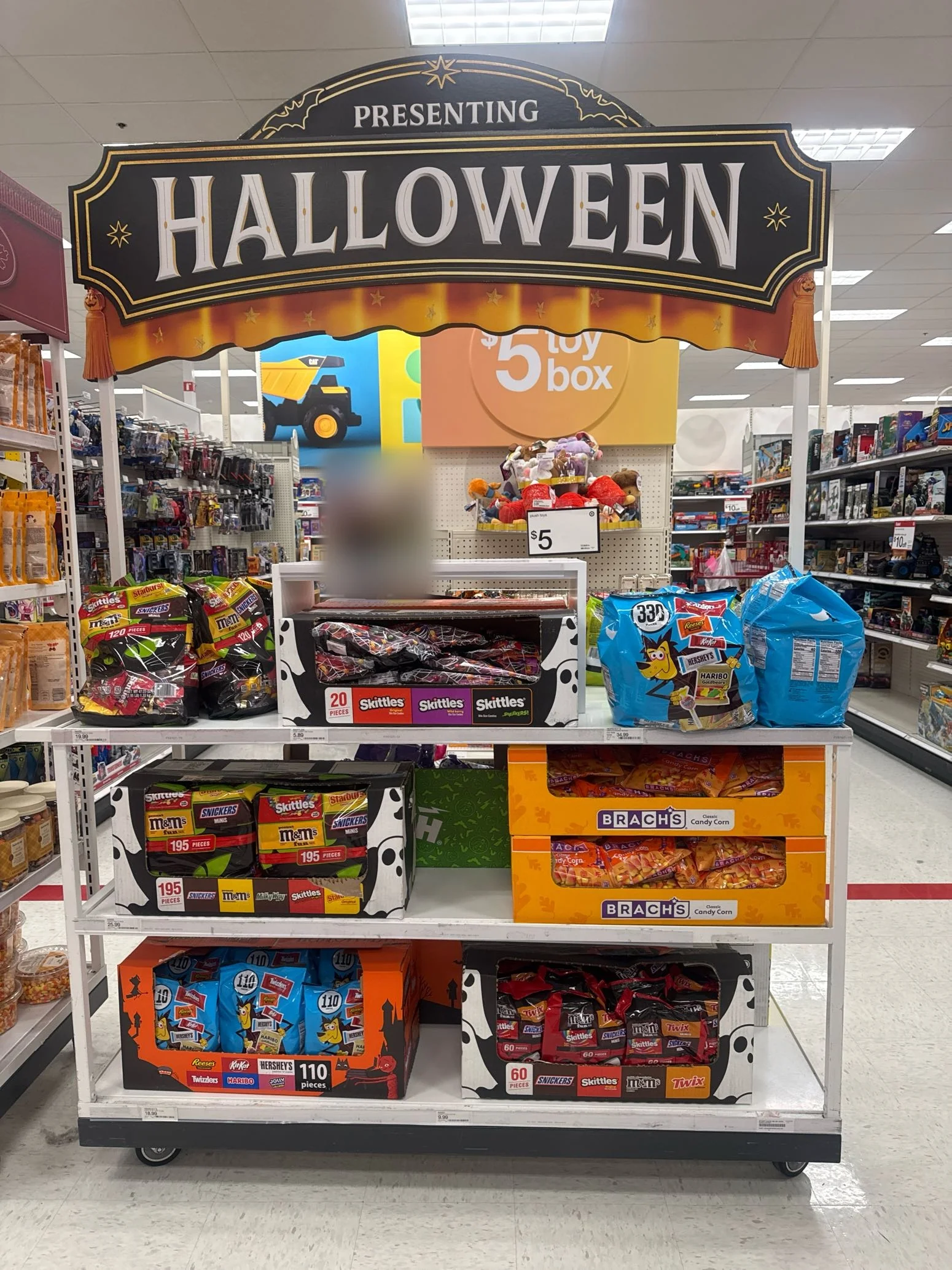
At Walmart, pallets were more common, and almost half of the displays were located at the entrance or checkout. Hershey's and Mars accounted for most of the space.
That puts Halloween where every shopper walks: the front door and the register. If you're not on a front-end display there, you're missing the highest-traffic space in the store.
Salty Snacks Barely Showed Up
PepsiCo/Frito-Lay brands appeared on just 4% of displays. Store brands also accounted for 4%, while Ferrero appeared on 3%.
On the floor, Halloween is a candy holiday. Candy brands took almost all of the space outside the seasonal aisle in the stores we checked. For salty snacks, that looks less like a closed door and more like space nobody fought for.
The Plan vs. the Floor
Seasonal displays get negotiated months in advance. Once the season starts, the only question that matters is whether that plan actually shows up in stores, and where.
A display that was sold in but never set is money already spent on space that isn't selling anything. With Halloween, the window to fix is just a few weeks.
“Every brand negotiates these displays months in advance, and the question is whether it actually shows up on the floor for shoppers to find,” said Zack Baker, US Head of Sales at Roamler. “If it doesn't, that's sell-through you don't get back after October 31. Checking stores during the season means you can still fix it.”
In-store checks show you three things while there's still time to act: which displays are in place, where they are, and which brands are taking the space.
About the Study
Roamler checked 103 stores (48 Target and 55 Walmart) across 22 US states between September 29 and October 12, 2026. Roamlers answered the same questions in every store and took photos. Since up to three displays were recorded per store, and half of the stores reached that limit, the number of displays is likely understated.
The study covered Halloween candy and snacks only. It did not cover decorations, costumes or toys.
Roamler collects in-store data for consumer goods brands and retailers. Used by major brands globally, Roamler is now available in the US.
Want to know how your Halloween displays, or your next seasonal campaign, look in stores?
Roamler can check your execution across US stores during every seasonal launch.
Get in touch